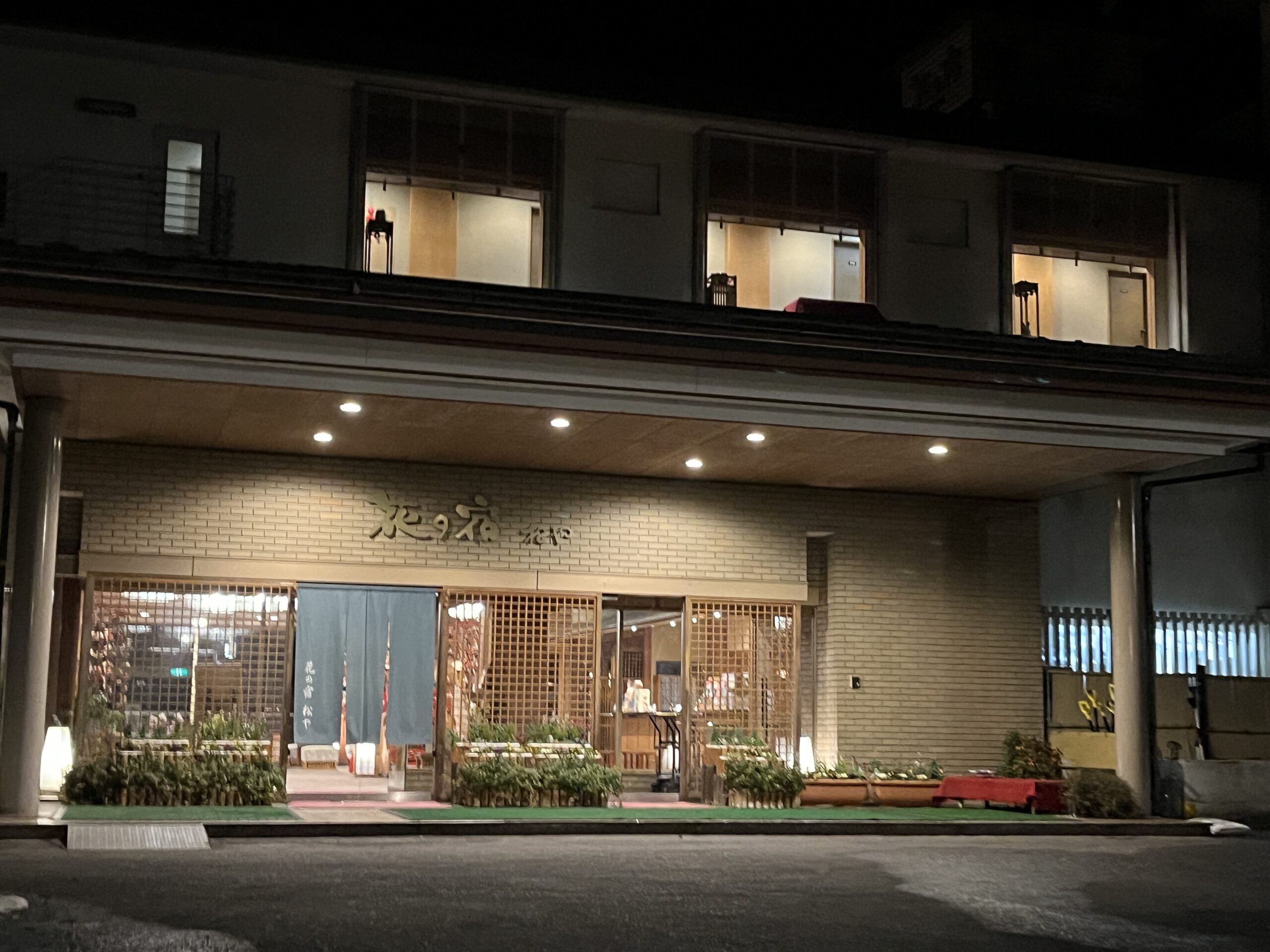
This was an overnight stay in early chilly February.
A visiting friend booked a stay for the experience and I was invited to join her. The room was “surprise me”, as in decided by the ryokan’s availability, and they were lovely enough to give us a corner room with windows on two walls.
The room
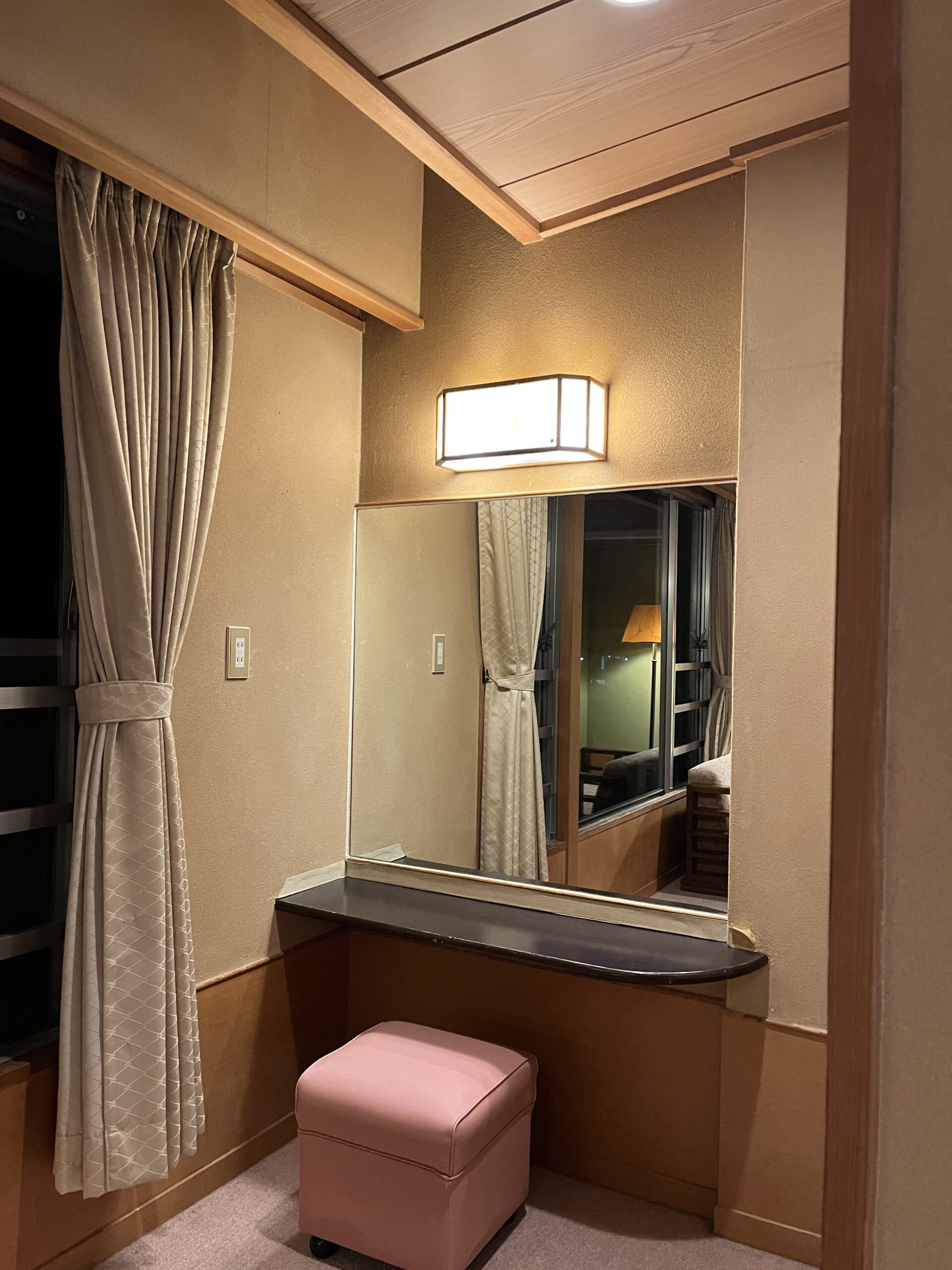
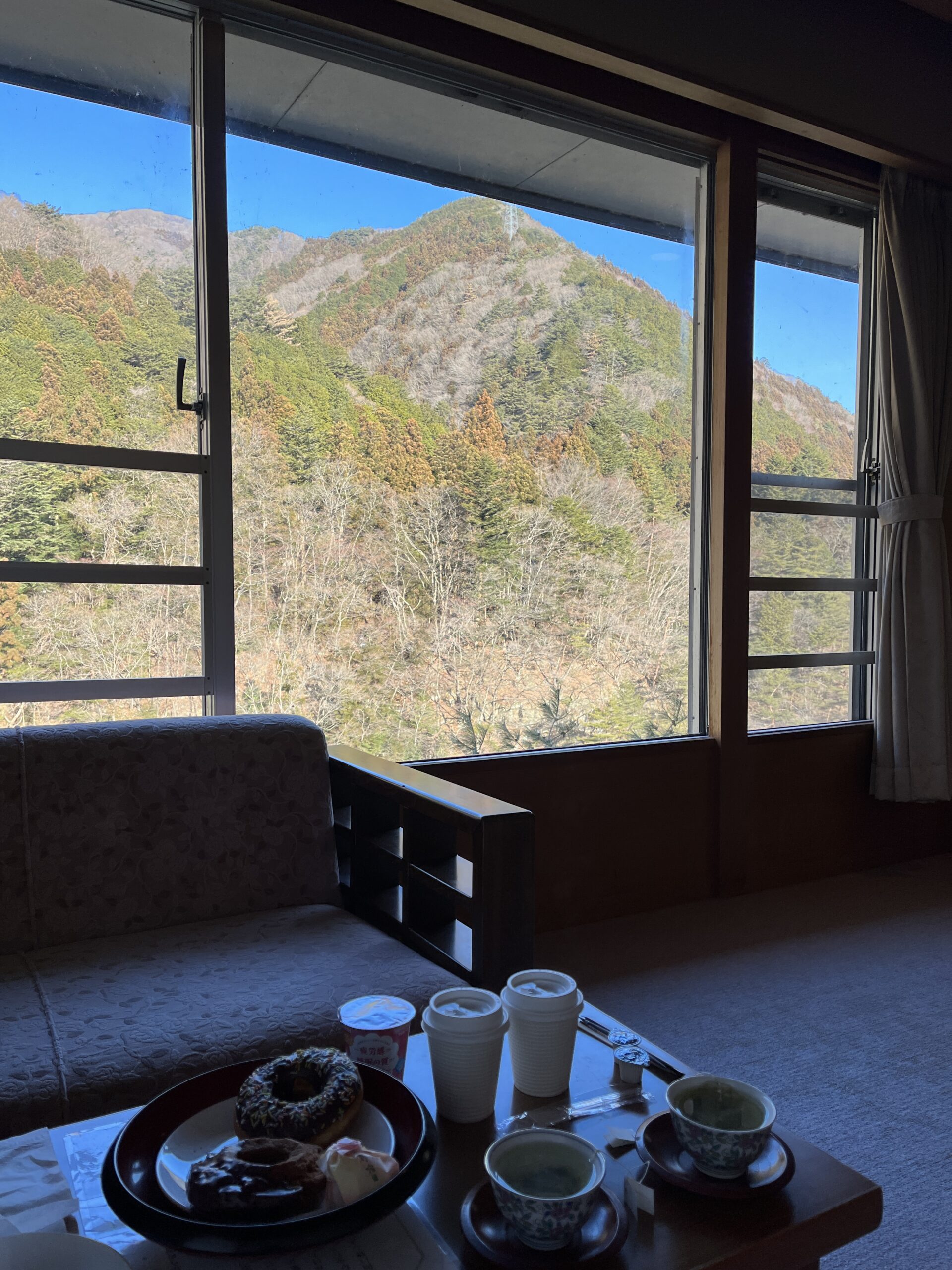
The room overlooked the Kinugawa river and their garden. It was big enough to fit four futons in the sleeping area, and it still had a living room area with a dressing table.
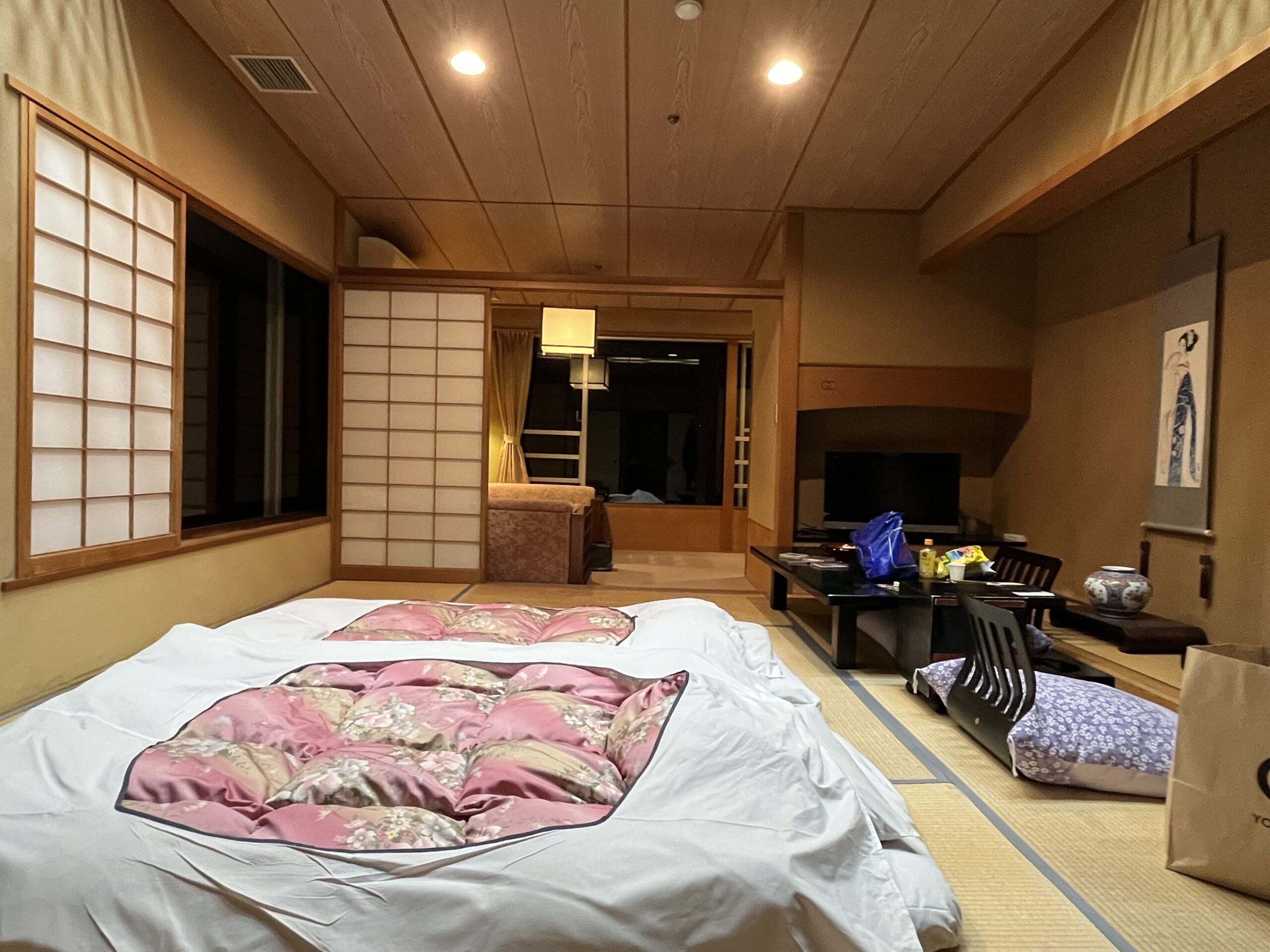
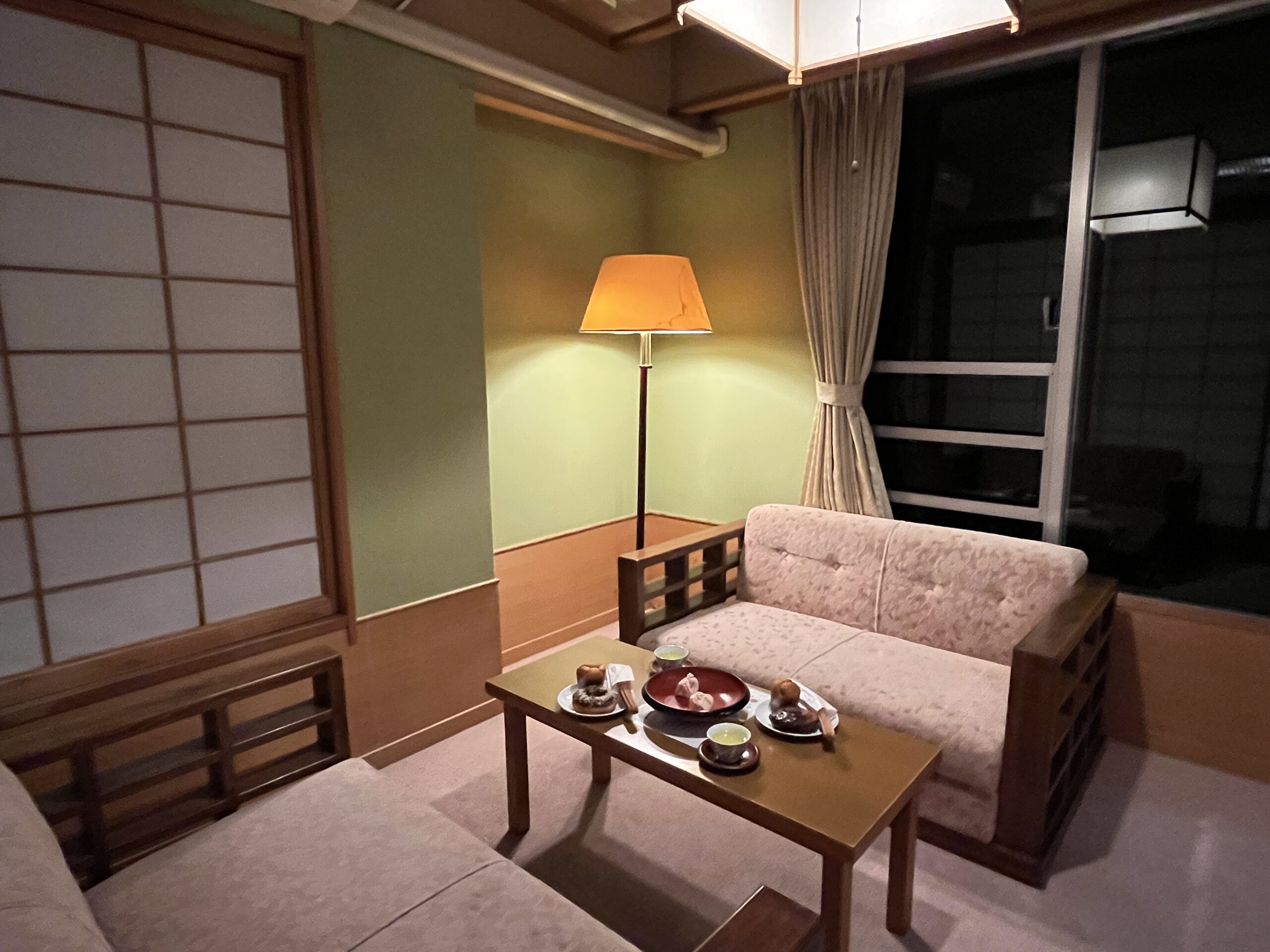
I loved the retro lamps and the couch.
I spent the morning drinking tea on the couch while looking out the windows.
picture of window view from couch.
Night
There was maintenance work being done in the ladies onsen so we had to use the men’s onsen on the first night. There was a schedule of alternating hours for men and women’s use.
Some of the guests were unhappy about this but I didn’t mind. I got to try out both the rotenburos!
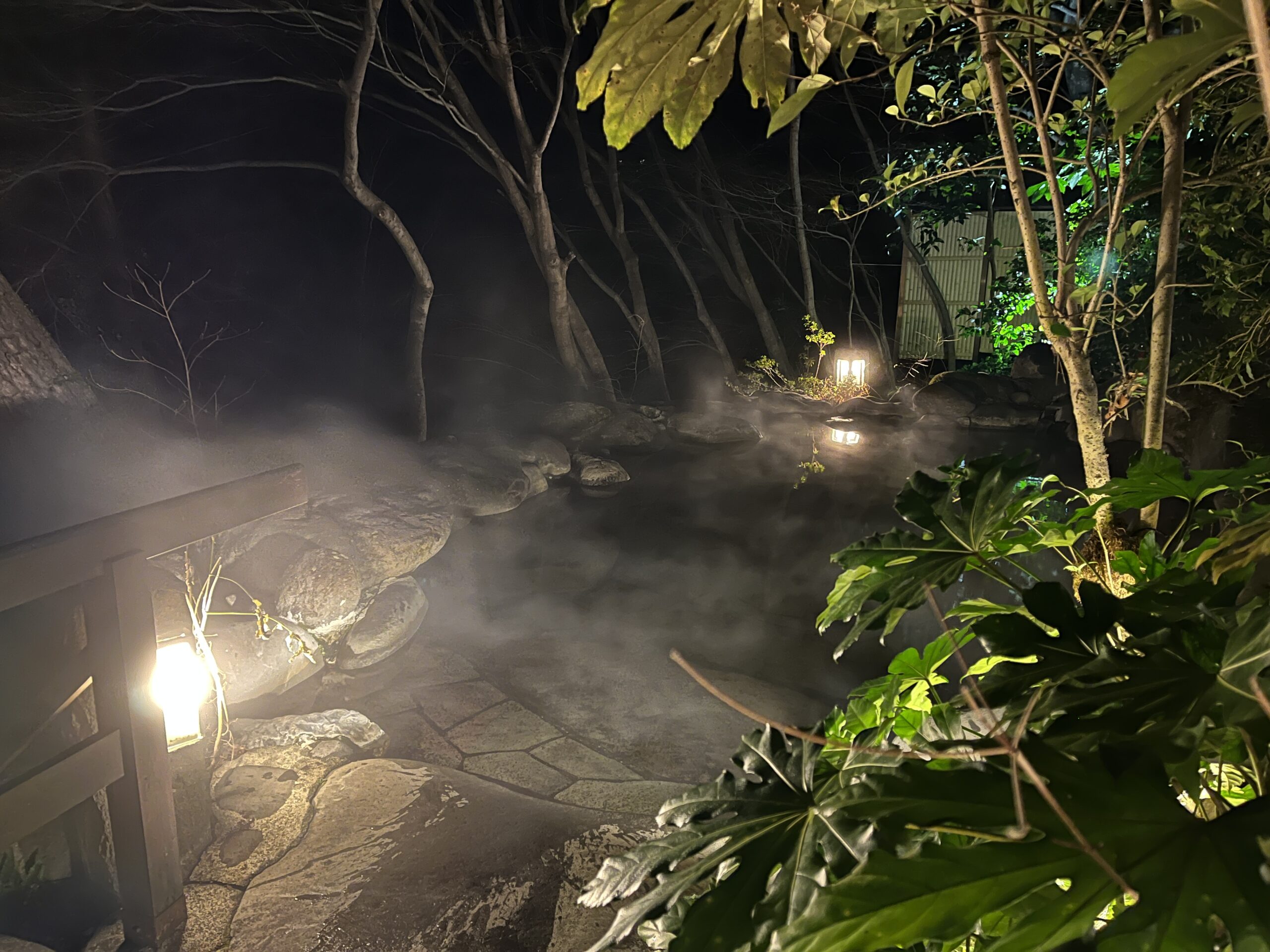
It was a late night soak and I had the whole place to myself. The mist rising off the water surface being lit up by the lanterns looked mystical.
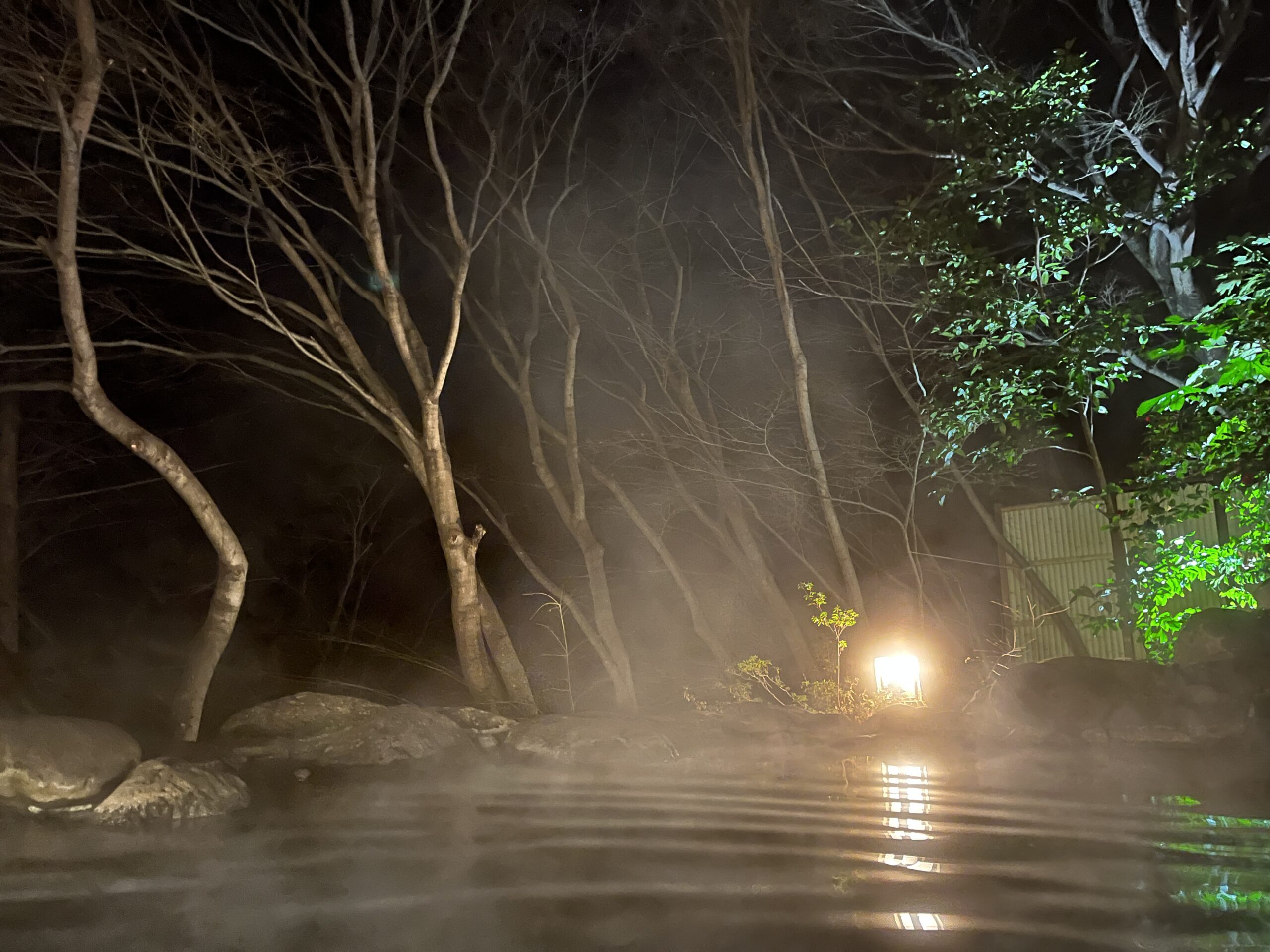
I perched on the edge of the large flat rocks, staring into the distance seeing nothing but blackness as I tried to listen for the river.
I can’t remember if I heard it.
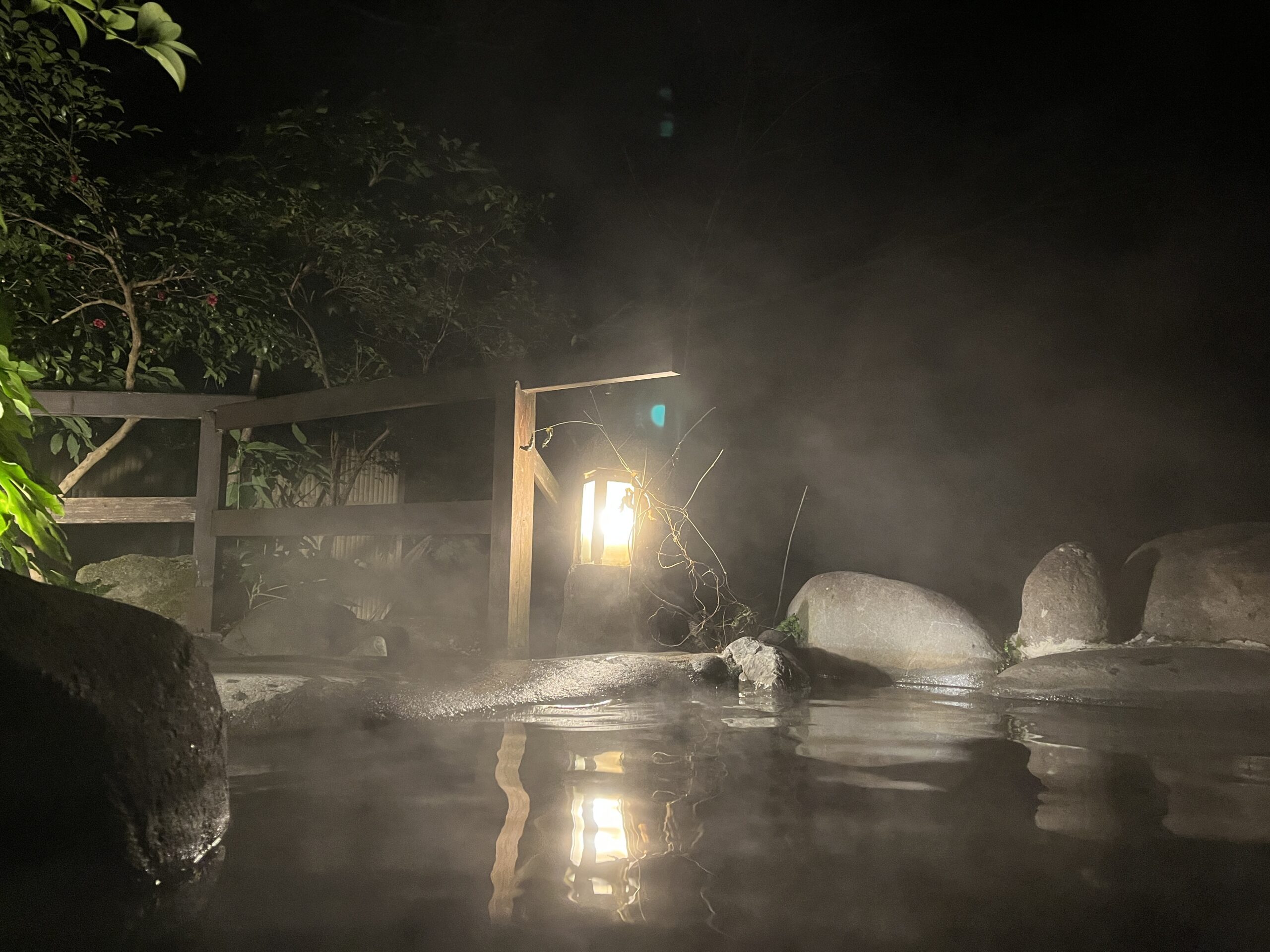
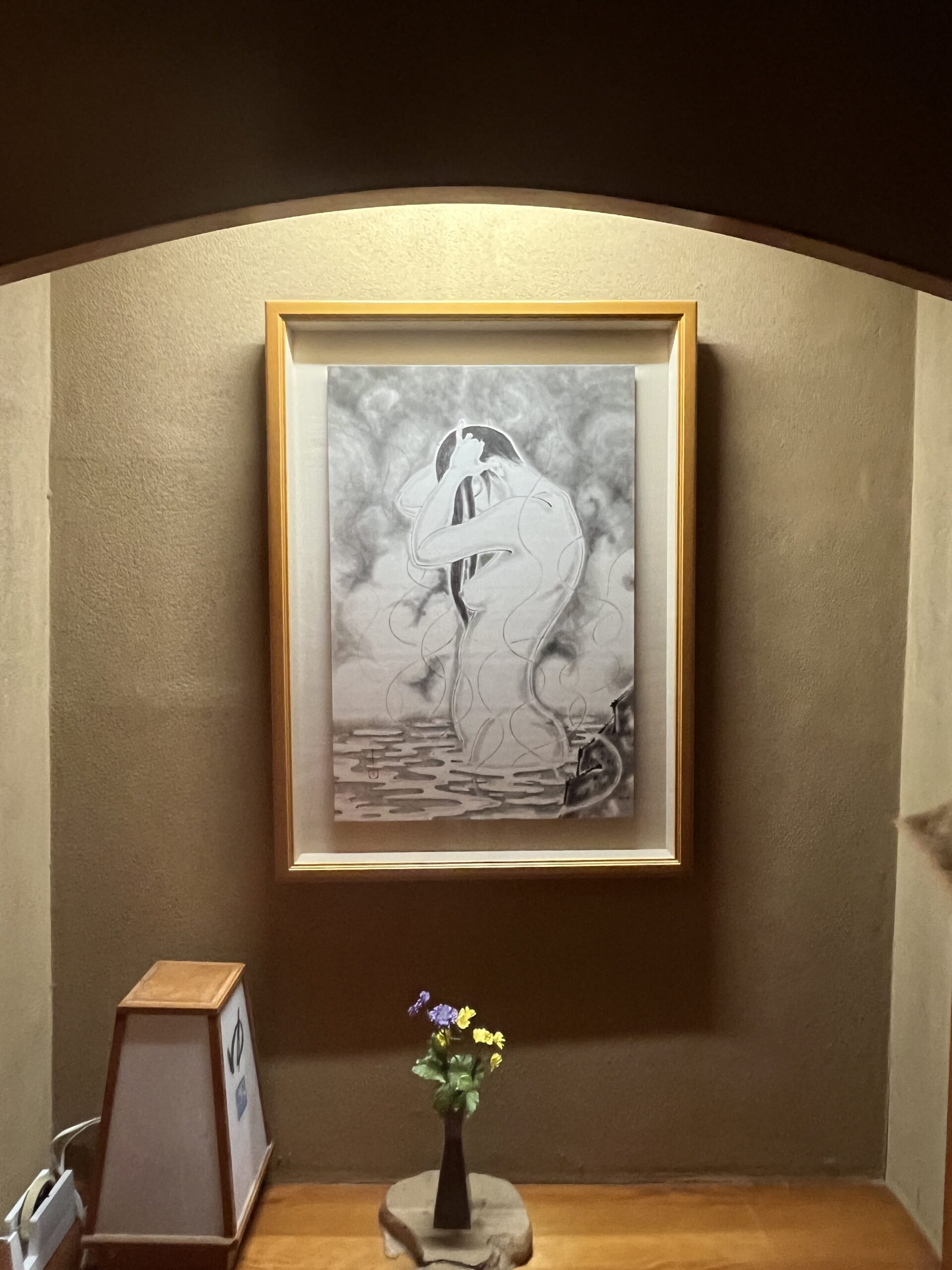
There was a singular artwork outside the men’s onsen that I noticed, and it wasn’t until much later that I realized how much it stood out from the rest of the ryokan’s decor.
The morning
We didn’t arrange for breakfast so I took my time with the morning soak.
The ladies’ onsen was finally available, and I was glad to be able to experience the difference.
The indoor bath was exactly what you’d expect from a riverside ryokan—a lengthy pool attached to the window giving a full view of the river.
The rotenburo, however, was where I spent most of the time. The gents’ version felt like a lush, private pool leaning on the building itself and hugged by a bit of greenery.
The ladies’ version was more of a statement. A wooden hut built over a solid iwaburo with a wooden bridge leading to it in a sort of a ceremonious way.
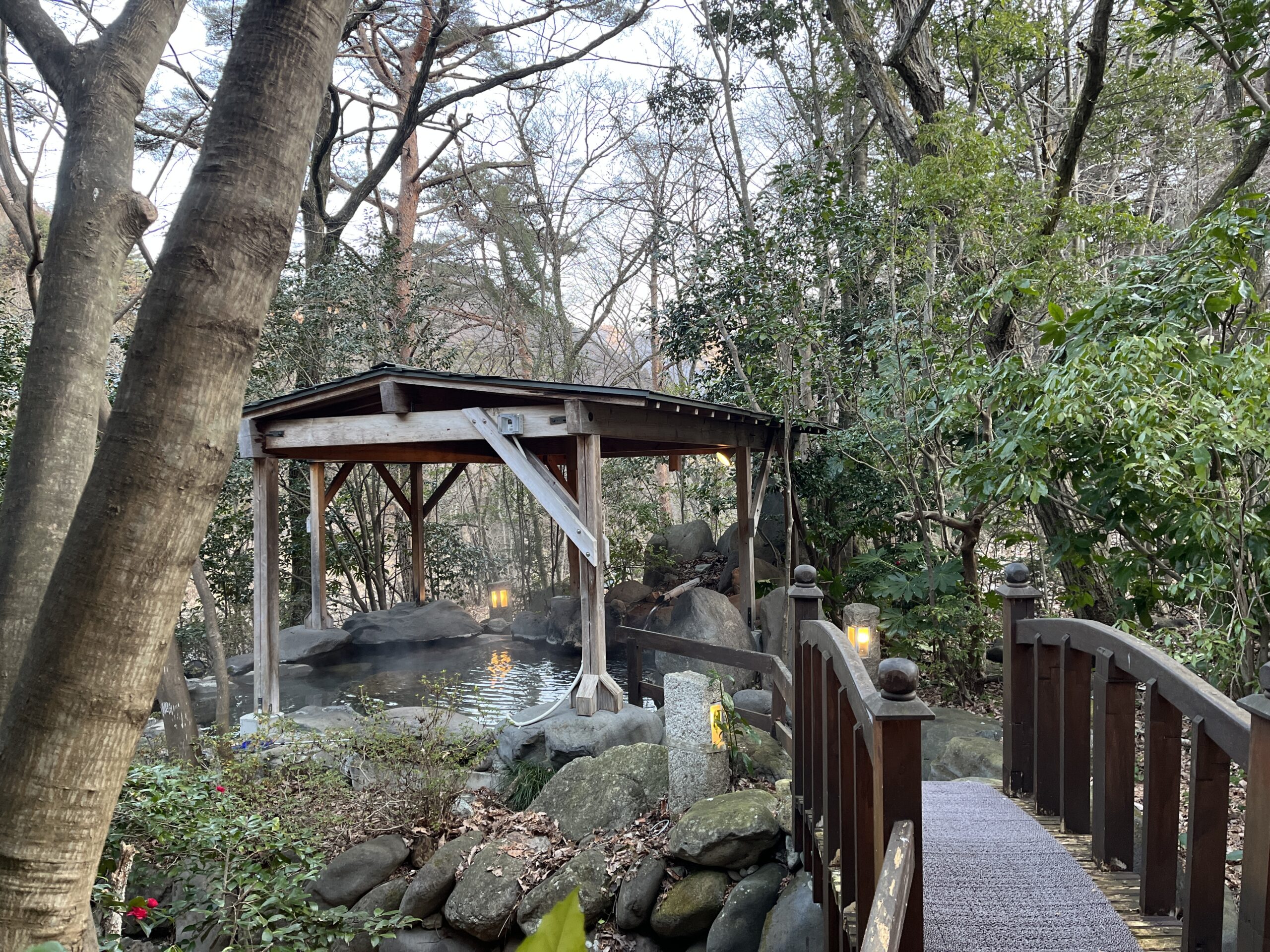
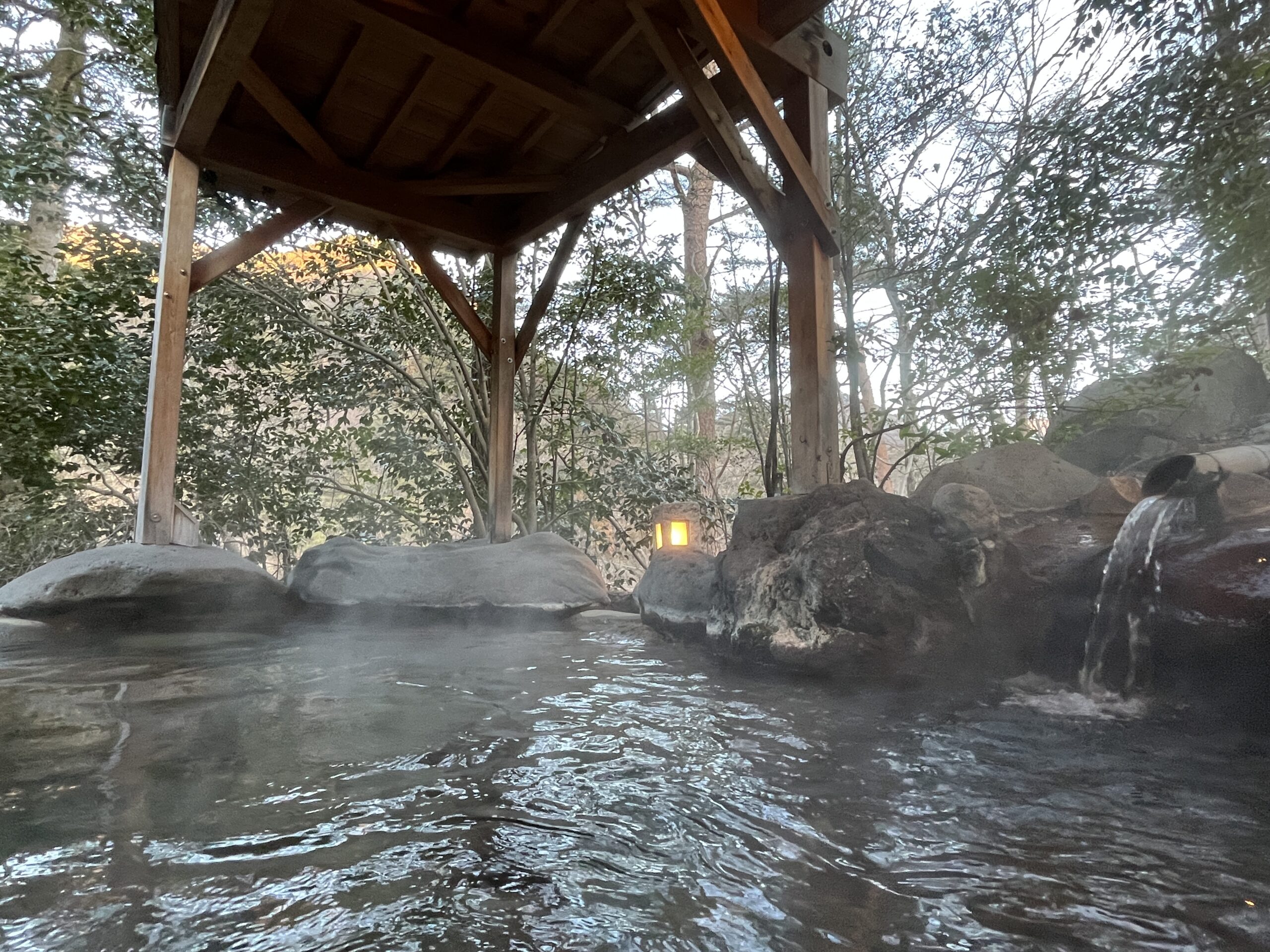
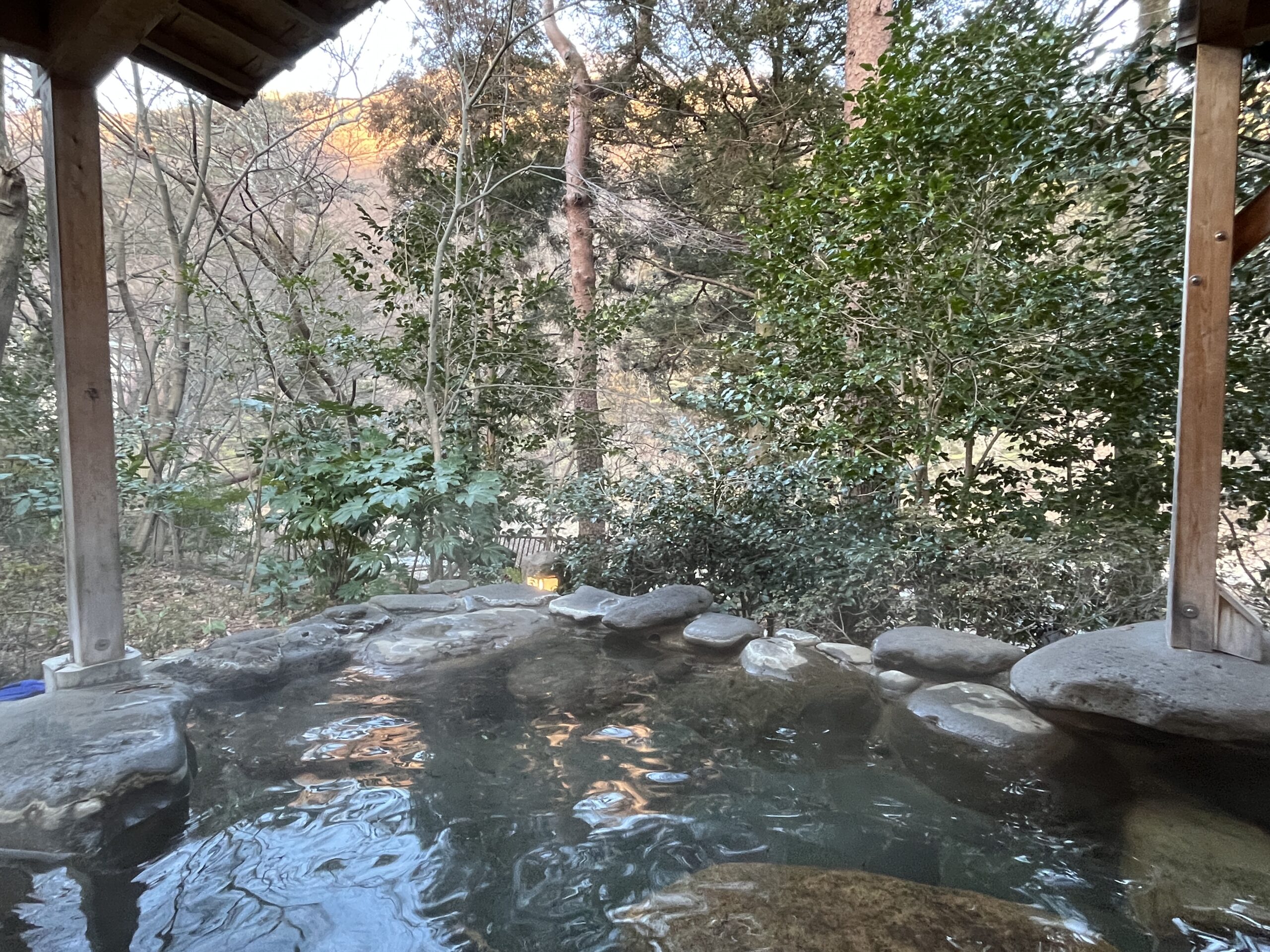
There was a sense of old luxury in soaking in these baths. Not in the way that extravagant hotels use finery and lavish presentations, but the type that comes from good things built by people who want good quality, made during a period of time where things were made to last, and they did.
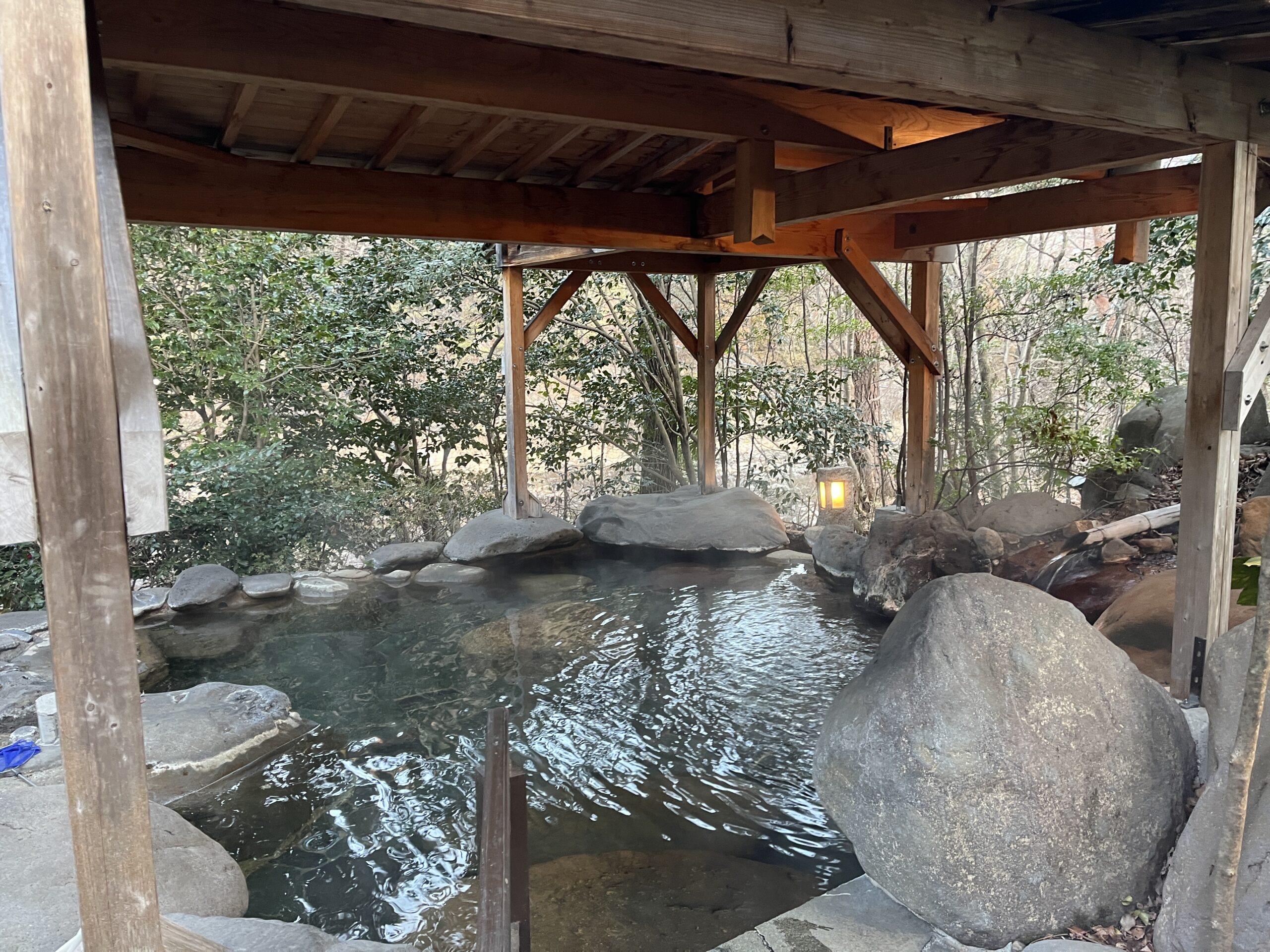
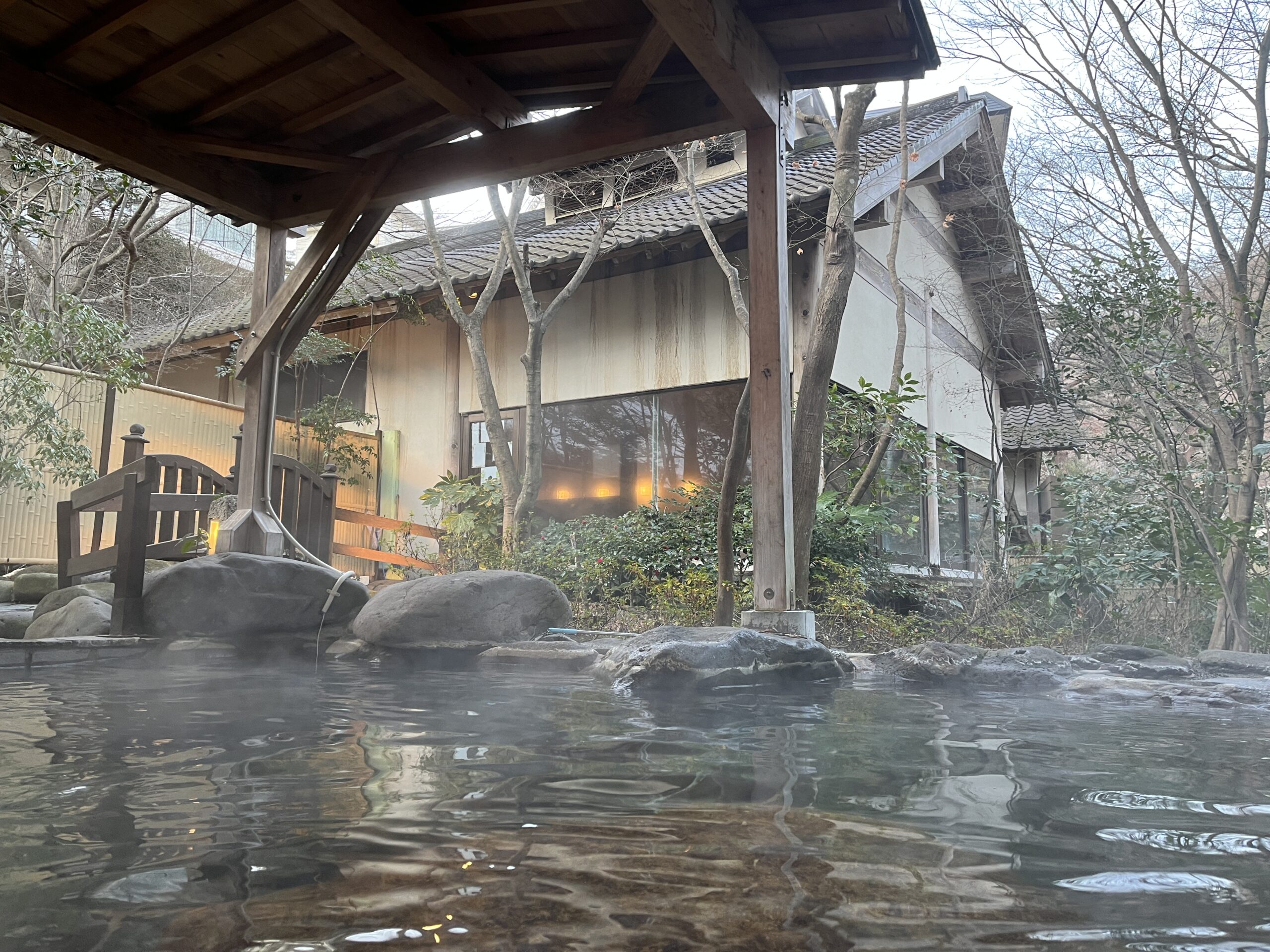
The waters were as good as it gets in any Kinugawa ryokan, and I probably soft boiled myself before getting out reluctantly.
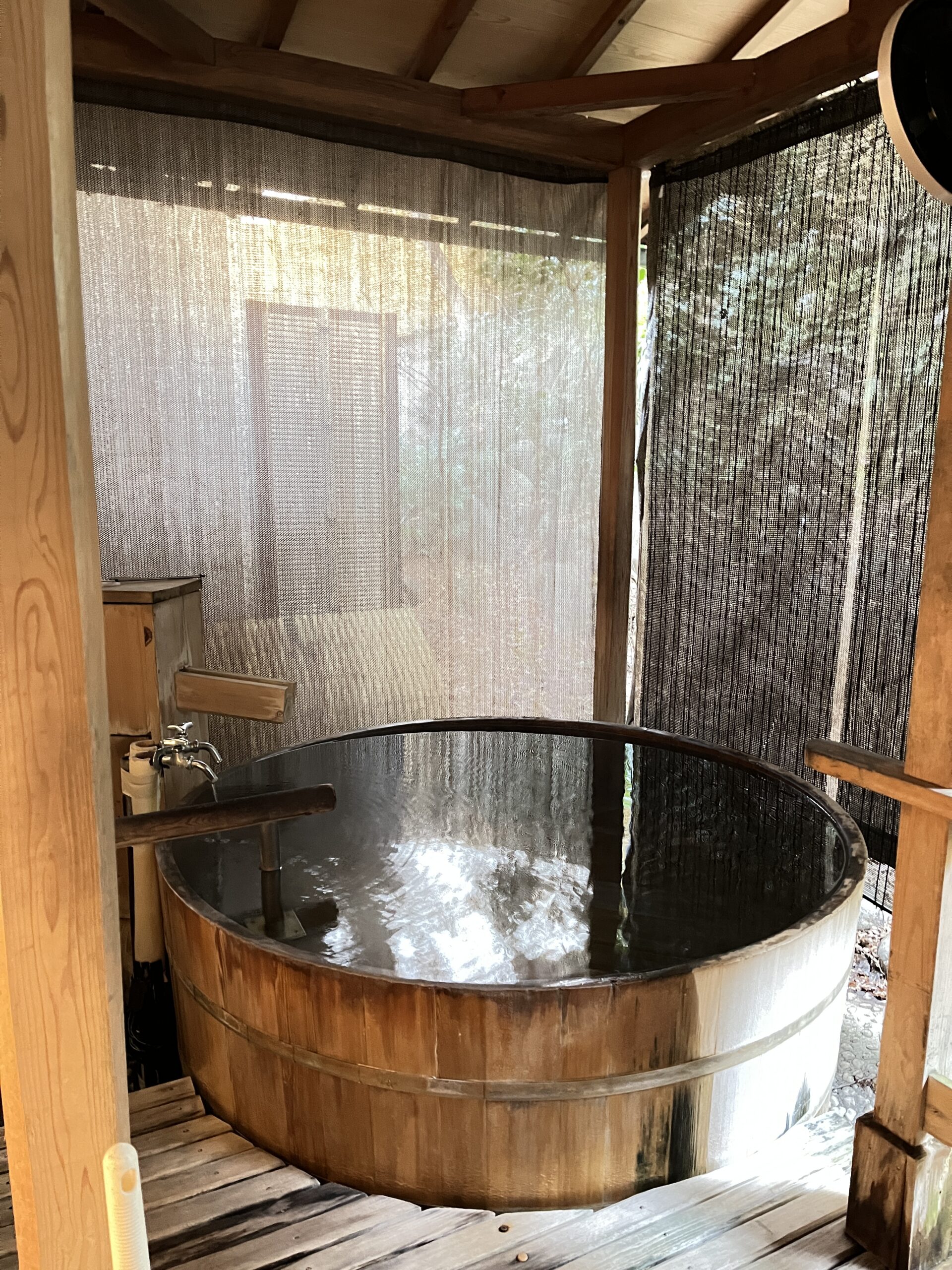
They had a private bath on reservation basis too.
The Garden
After my morning soak I drifted about aimlessly. The stairs climbed to a side door that led outside into the garden.
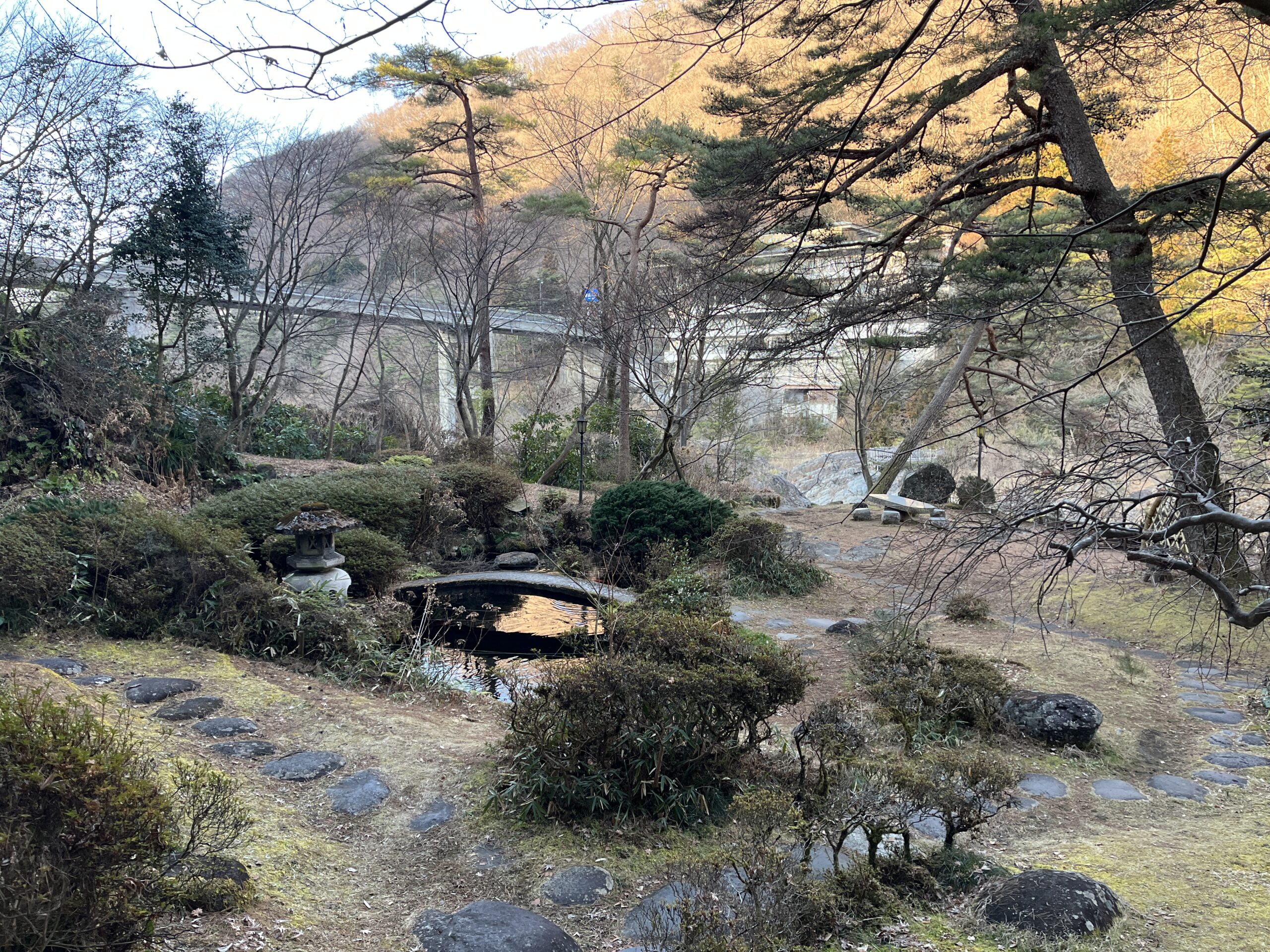
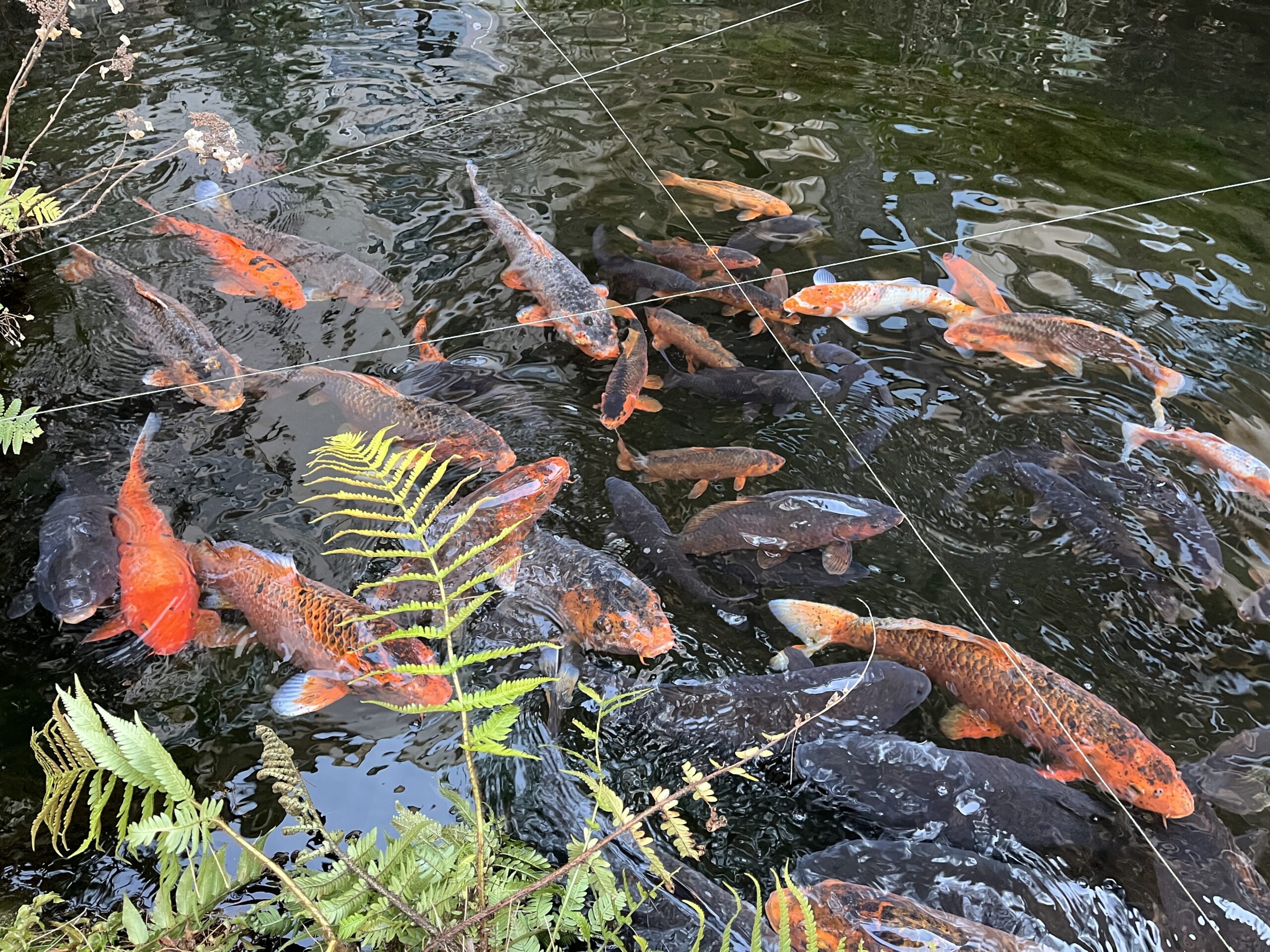
In early February half of the trees were bare and the grass were dried out, but I could see their garden pond its the tiny arched bridge and just a little further away, the Kinugawa river in full view.
The fishes swarmed out of wherever they were hiding as if greeting me when I crossed the bridge.
They looked plump and well looked after. I had the urge to tap their backs with my fingers because they looked so reachable.
Wandering
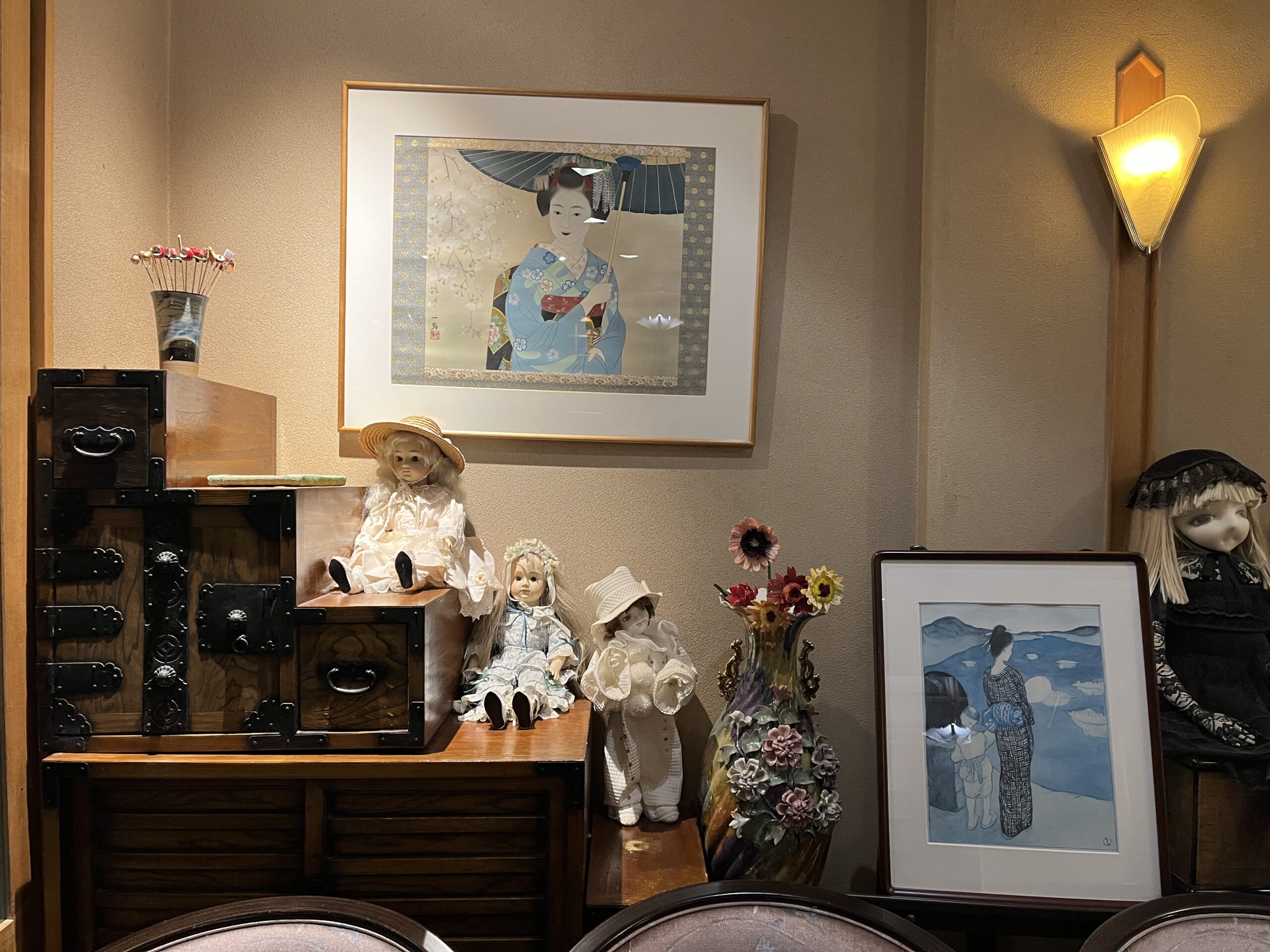
I drifted leisurely, intrigued by all the artwork, dolls and beautiful names throughout the building.
The interior
Right at the entrance we were greeted by the huge procession of Japanese dolls.
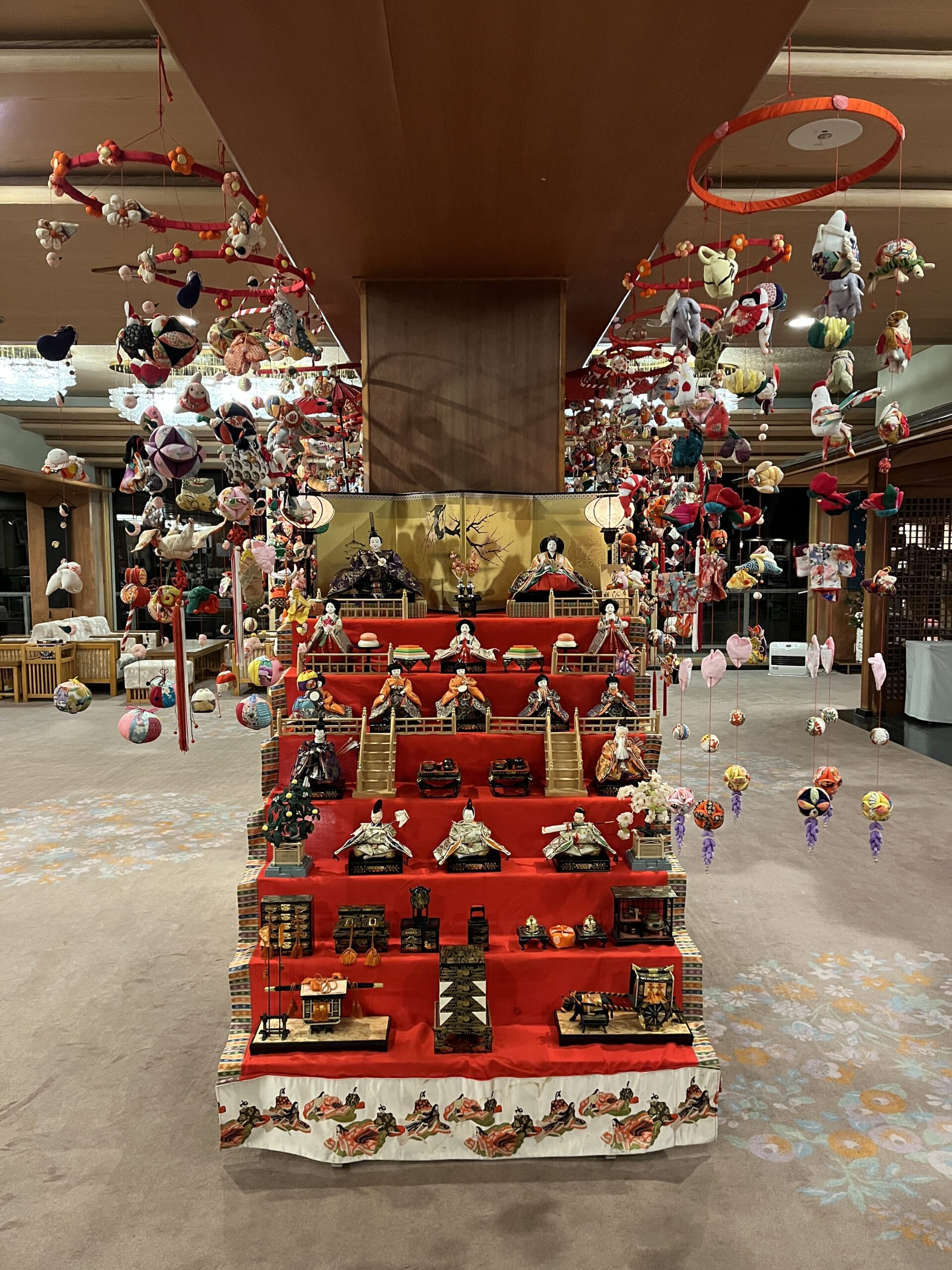
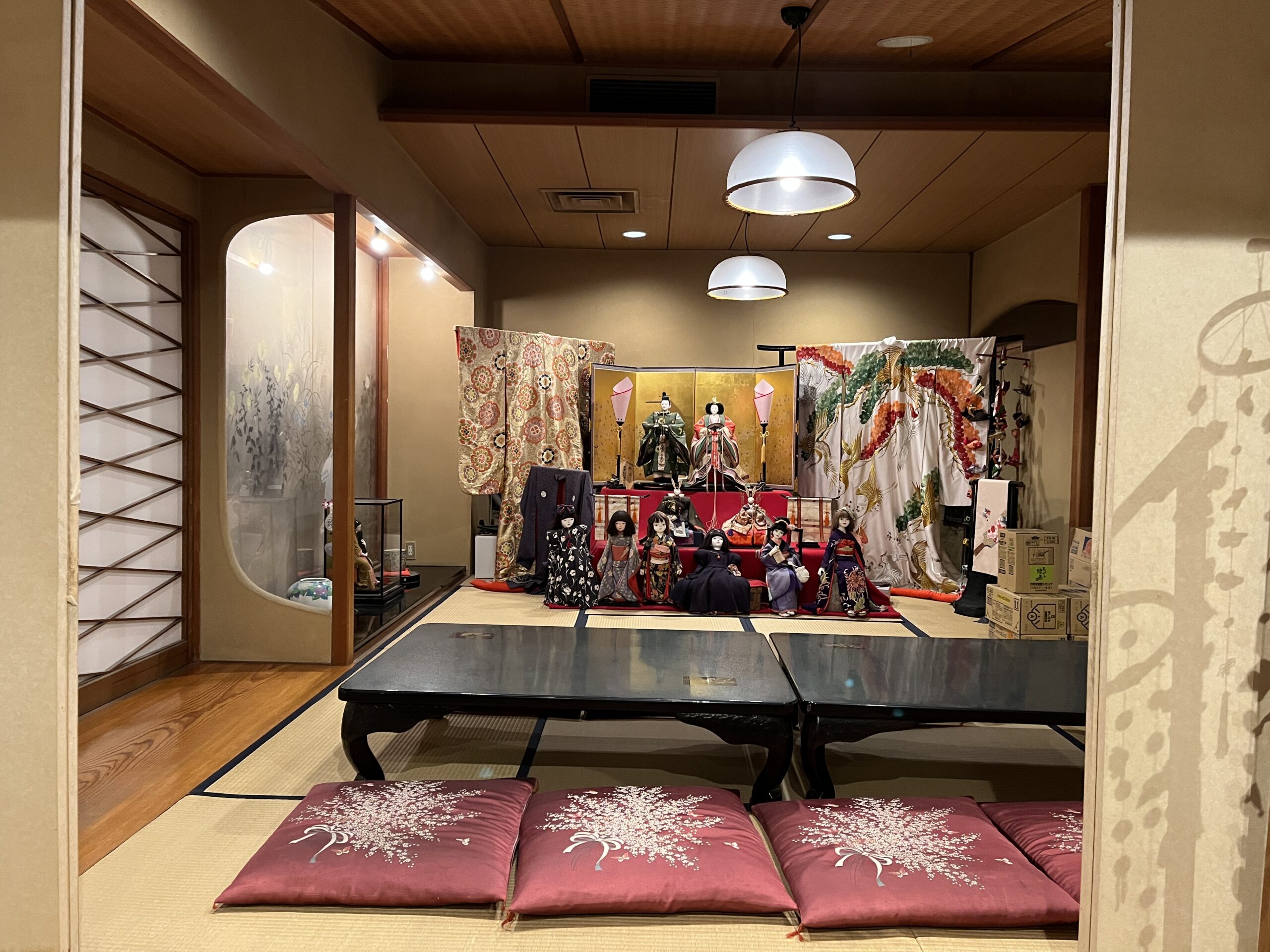
The area leading up to the elevator had another space displaying more dolls, the kind of space that you see when visiting old Japanese castles with tatami and sliding doors.
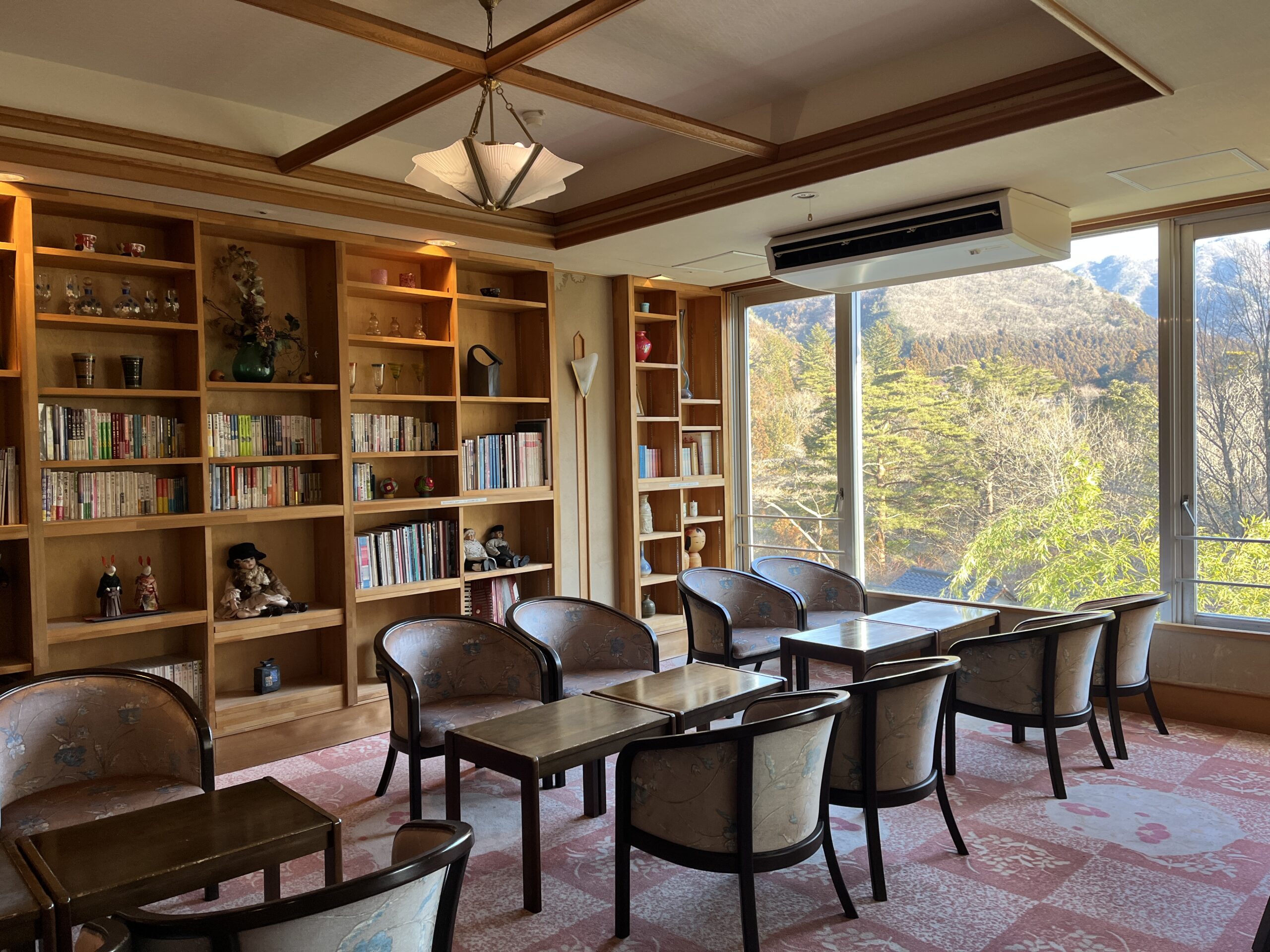
They even had a small study area with shelves of dolls and books. It looked eerie at night but it was starkly different during the day.
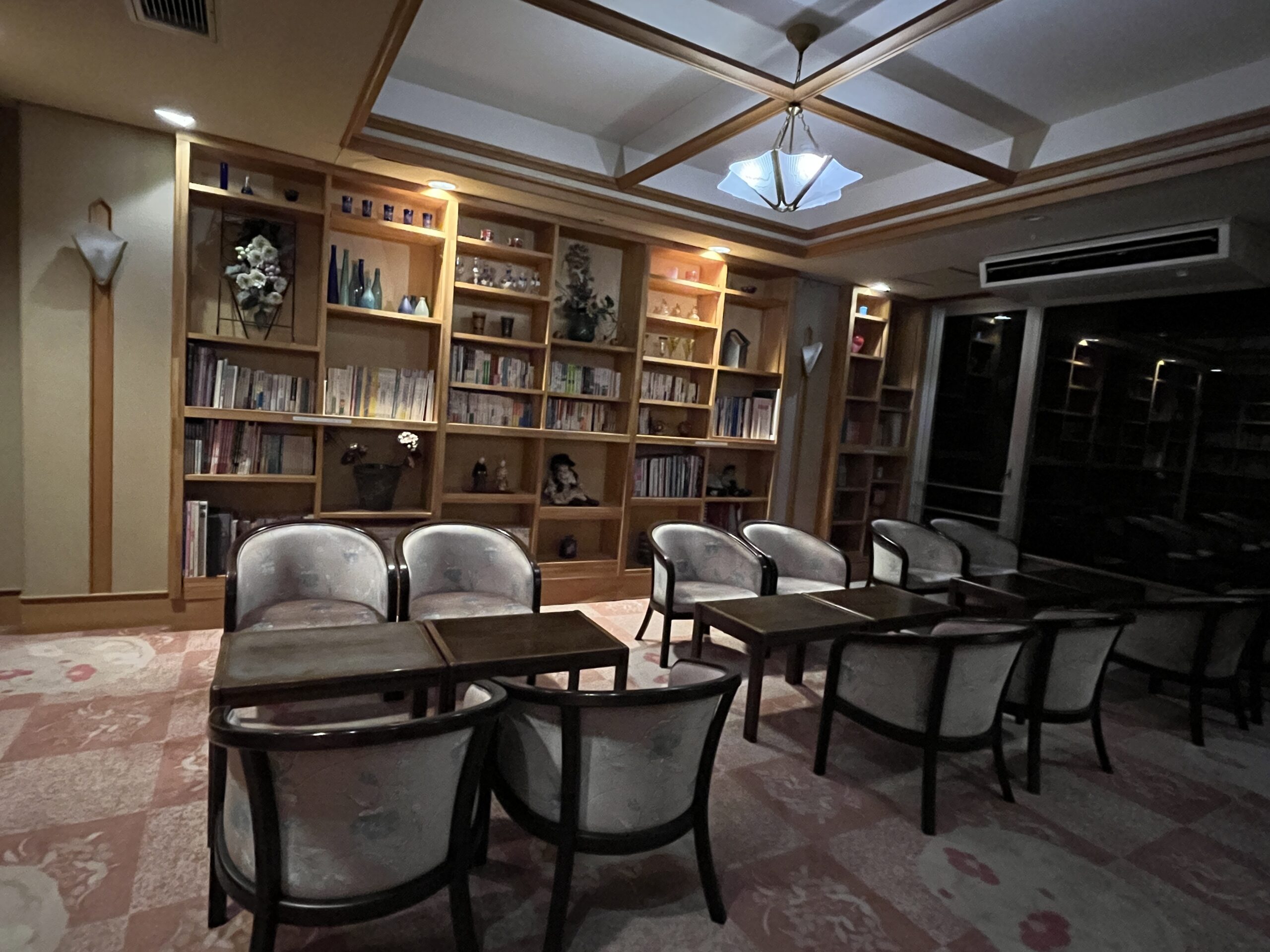
I took the liberty to explore the hotel floor by floor.
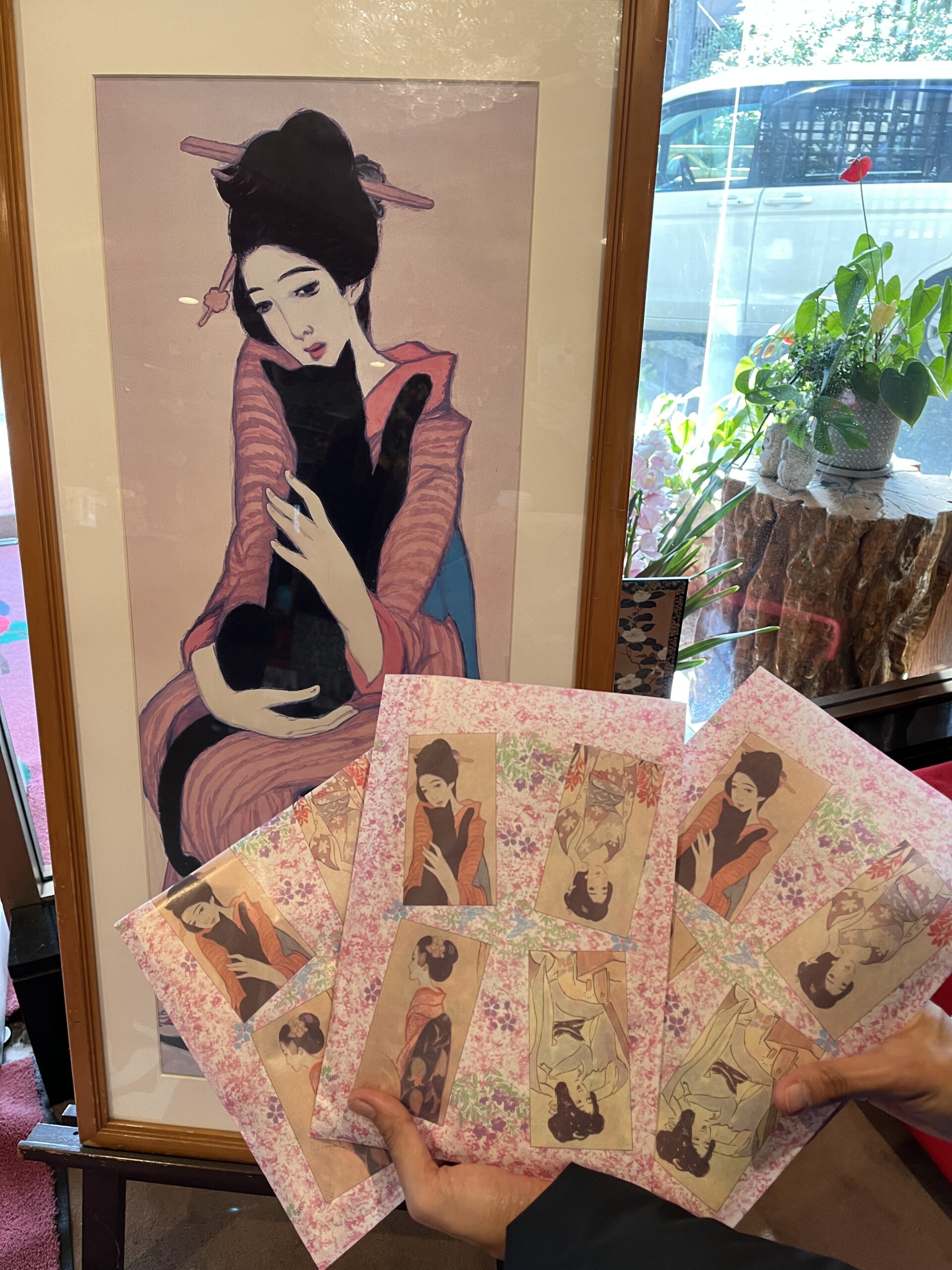
There was art everywhere. The walls, the rooms, even the elevator doors. All by the same artist who draws women with cats and emphasizes patterns, and the characters all look fluid.
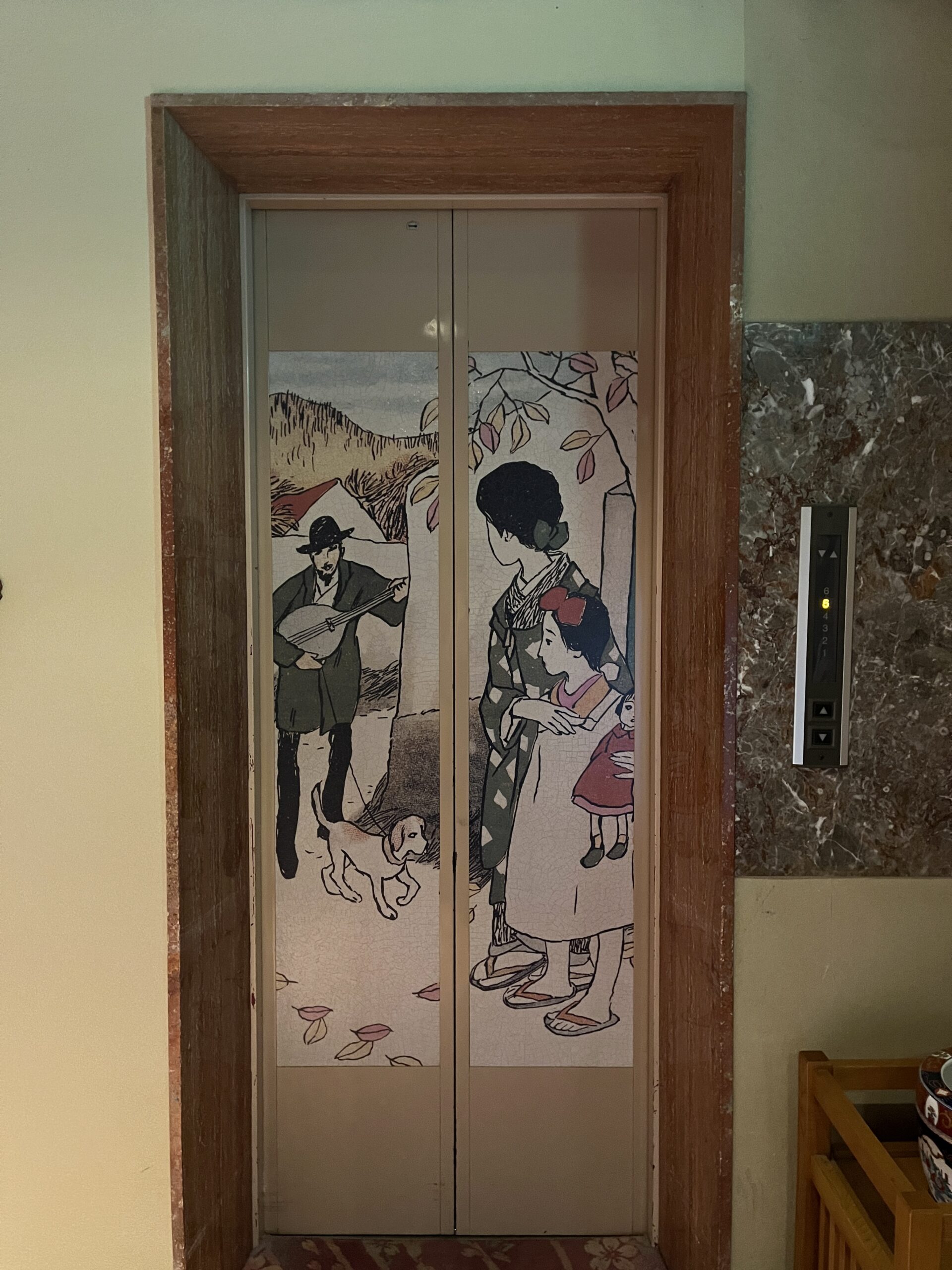
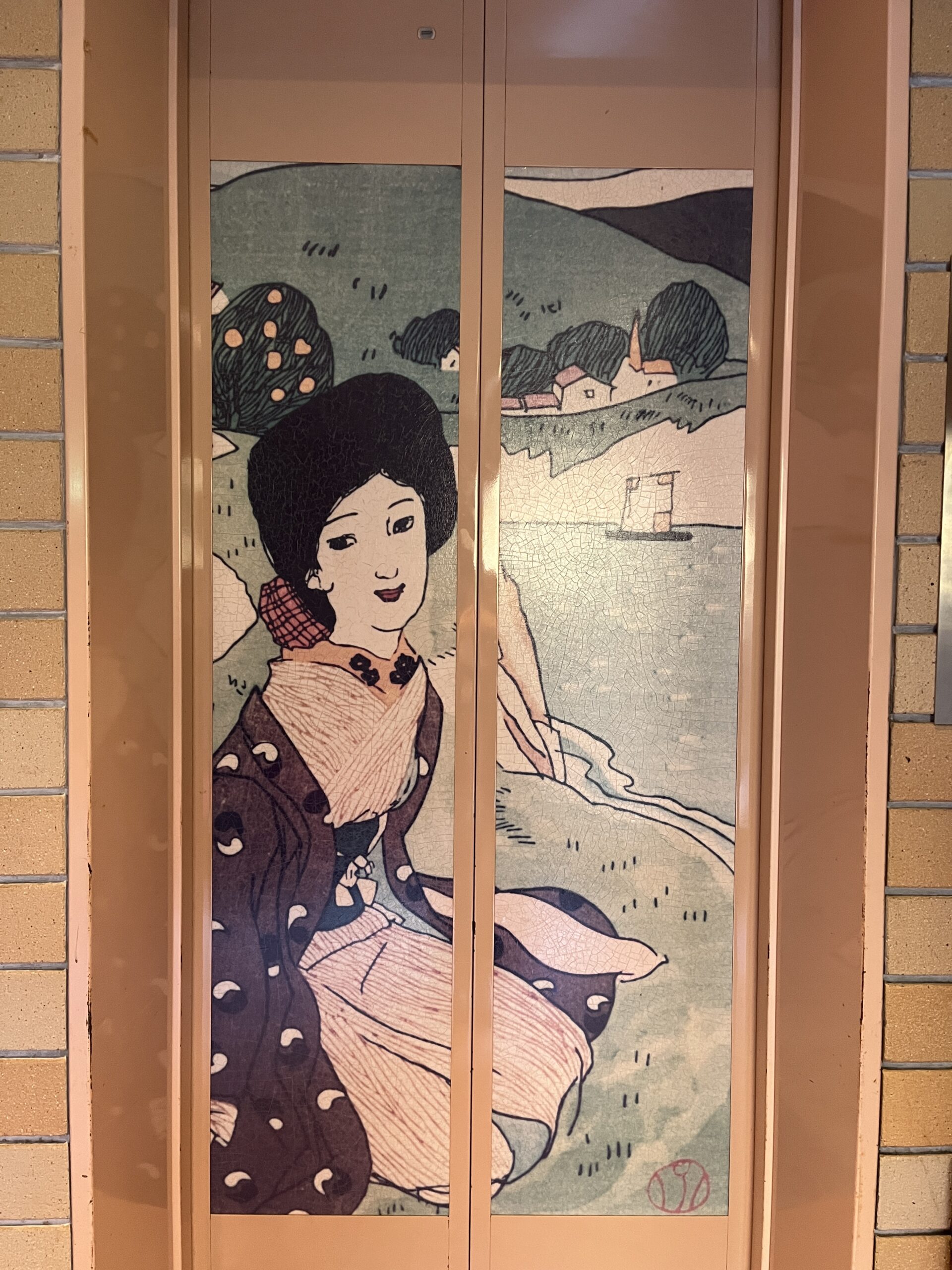
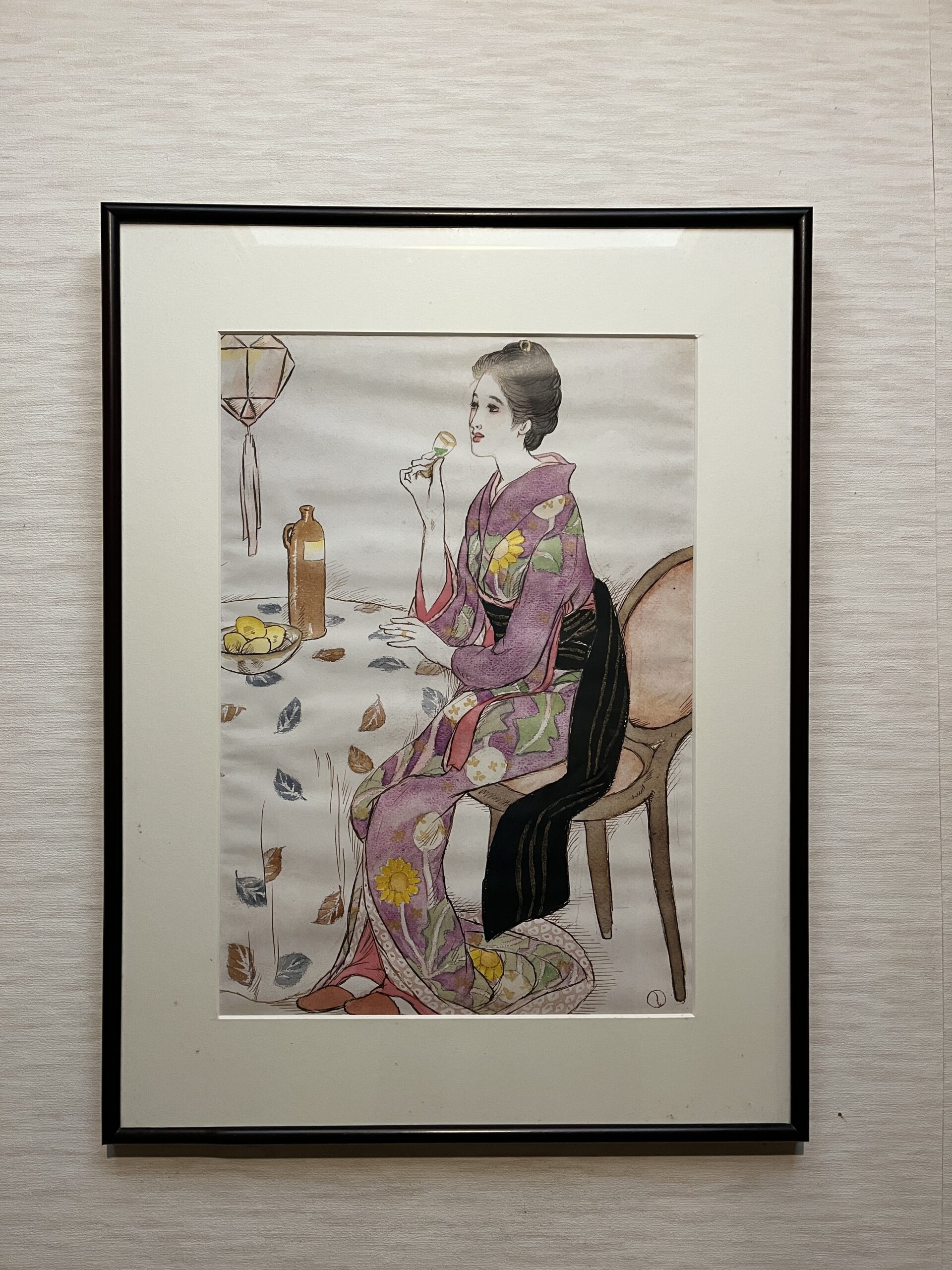
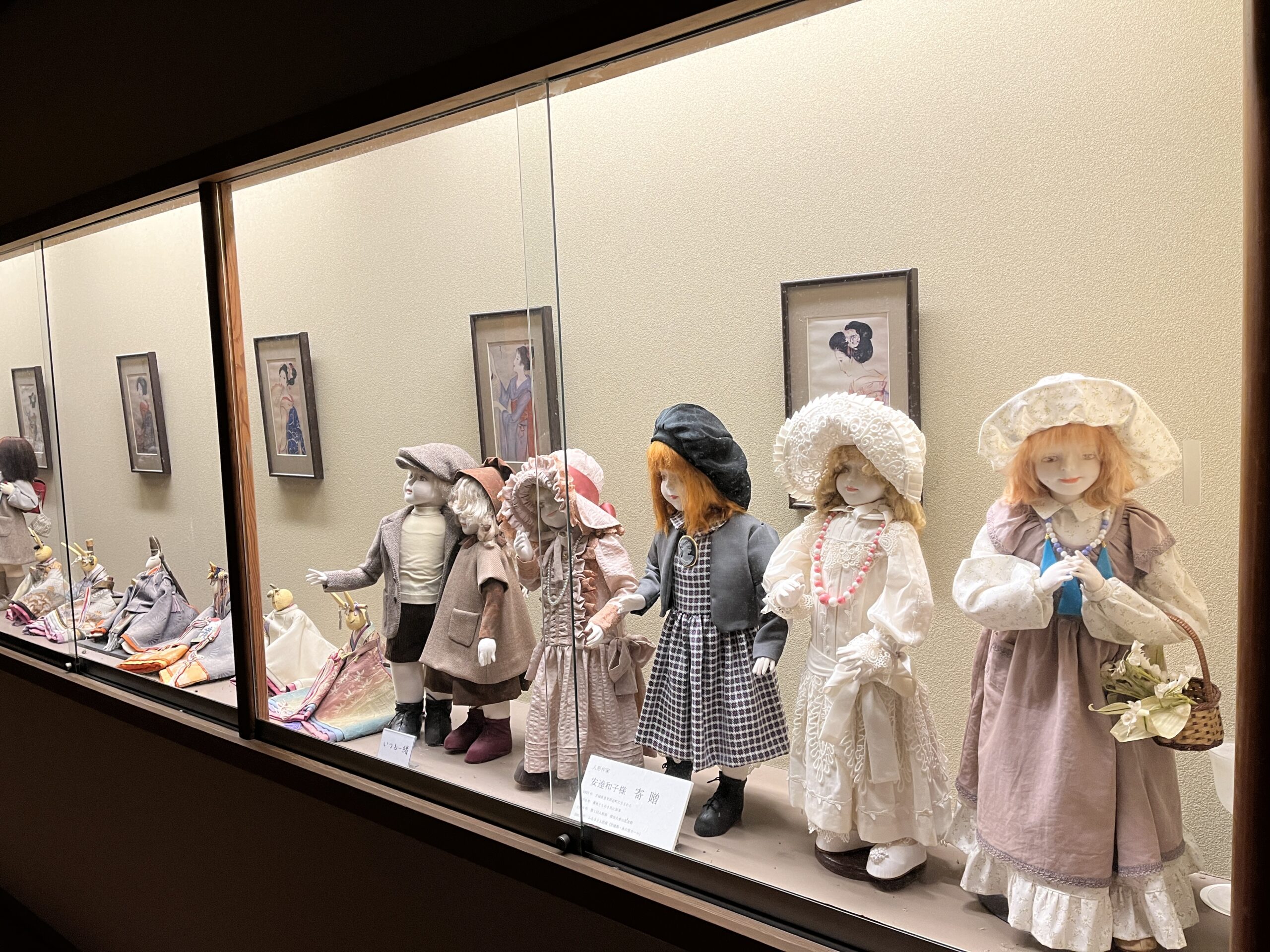
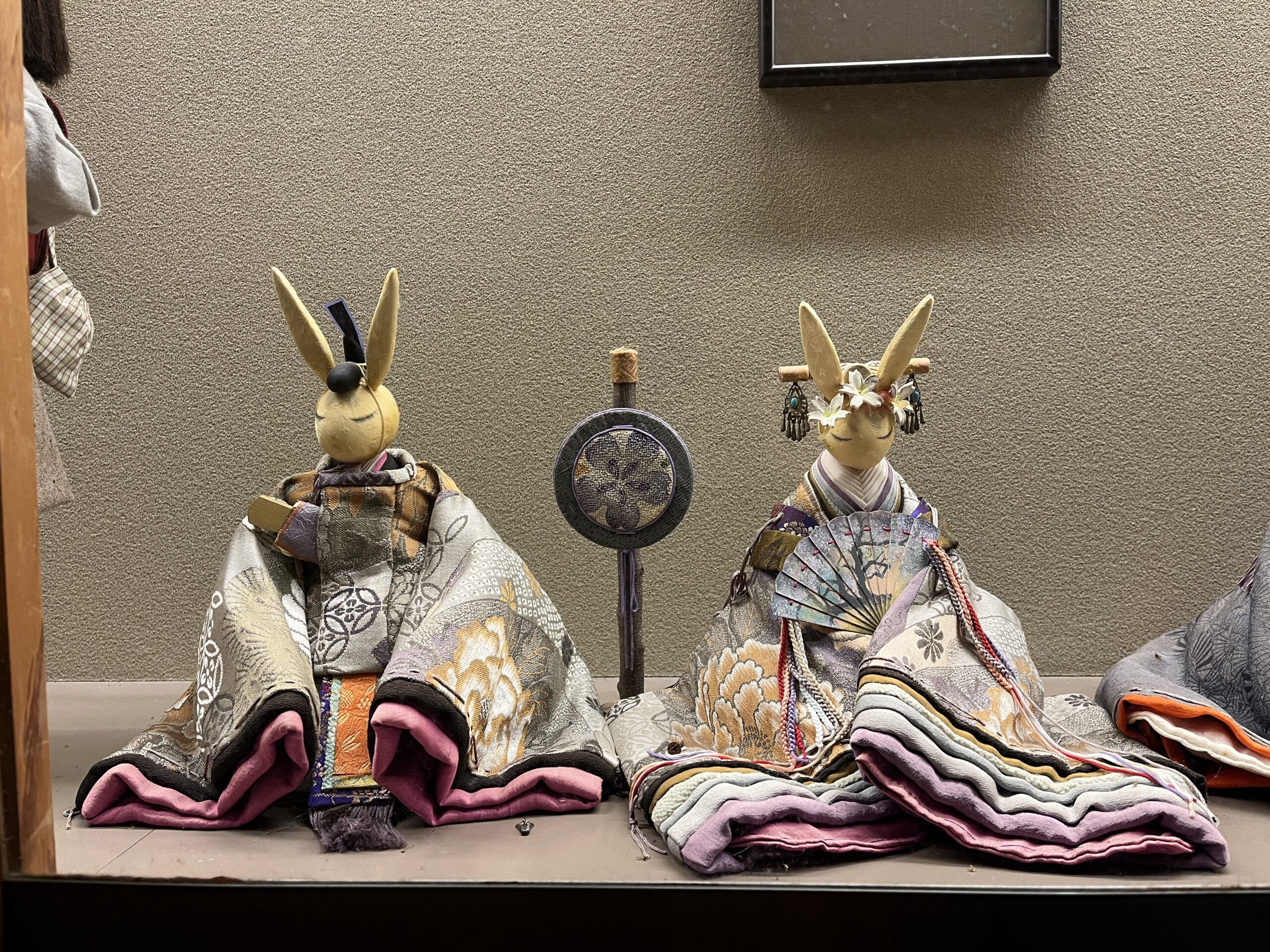
Every single floor had glass showcases that contained dolls in Victorian era clothing, and carved wooden bunnies in huge ceremonial kimonos.
Every single room had a different name with poetic kanji referencing nature. Our room was named “Hakubai” which meant “White Plum”.
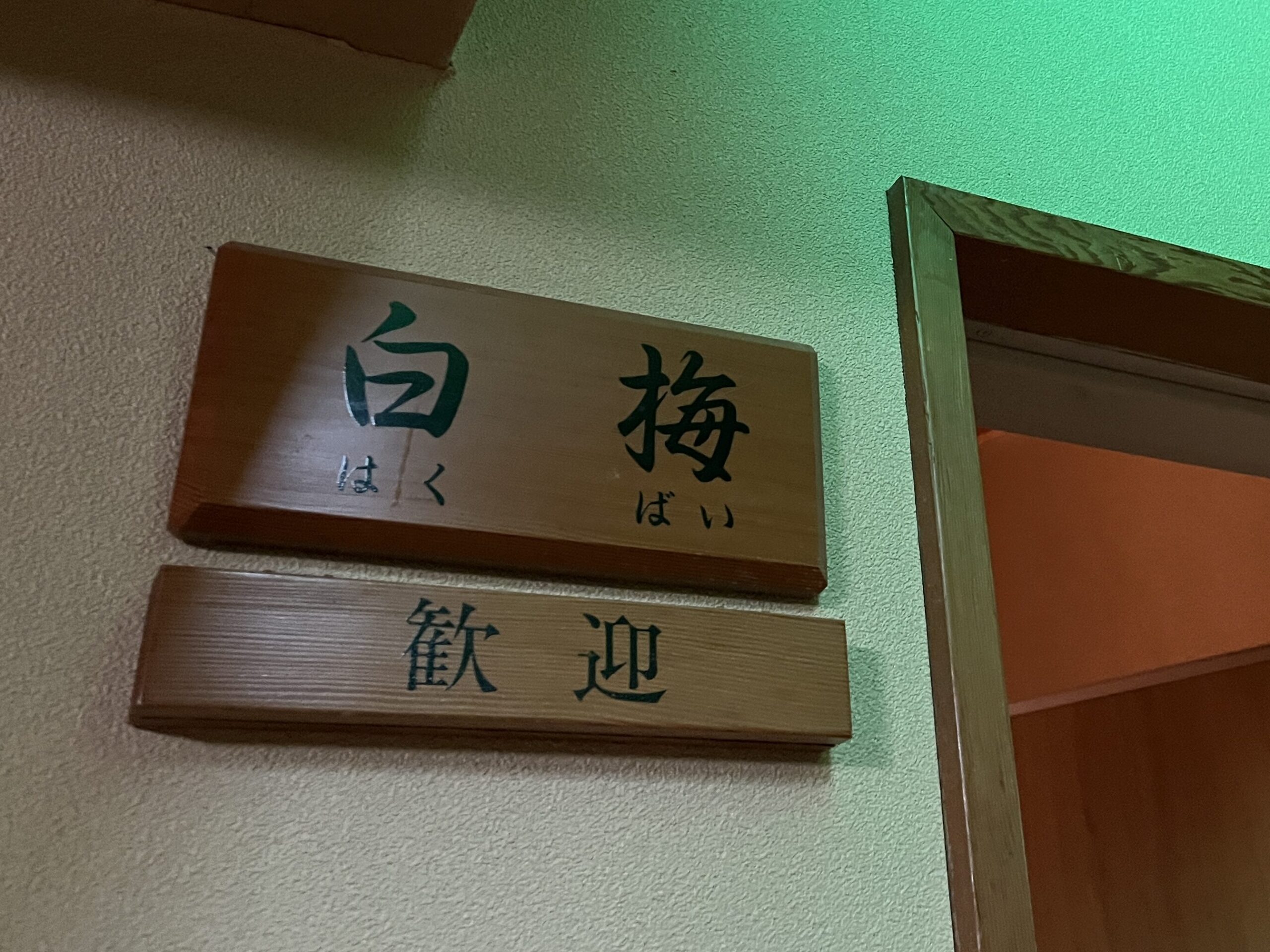
I strolled down the corridor reading the names of each room.
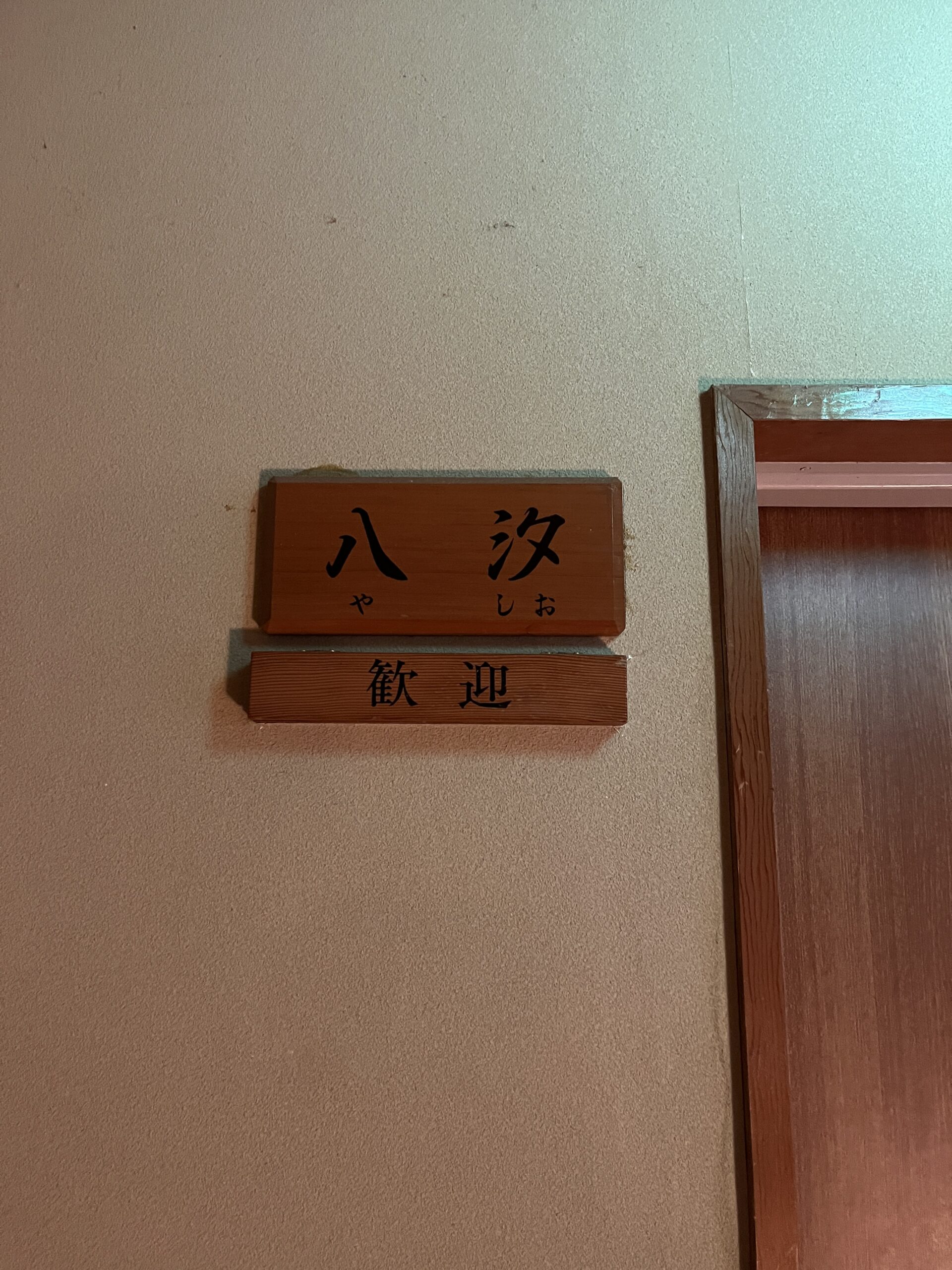
My favorite was “Yashio”. The kanji literally means “Eight tides by dusk”, but it is also the name of Tochigi’s prefectural flower, the Yashio Azalea.
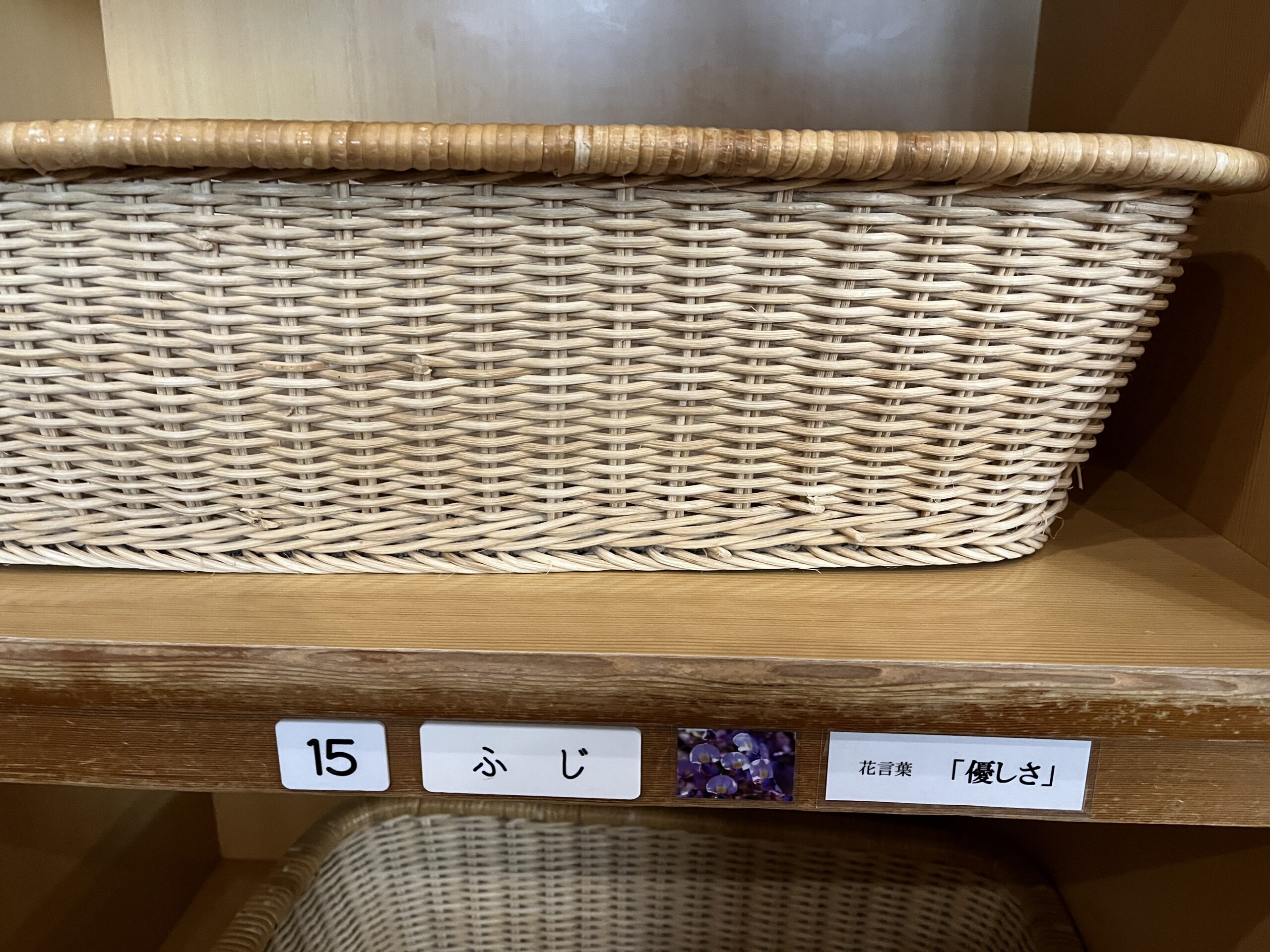
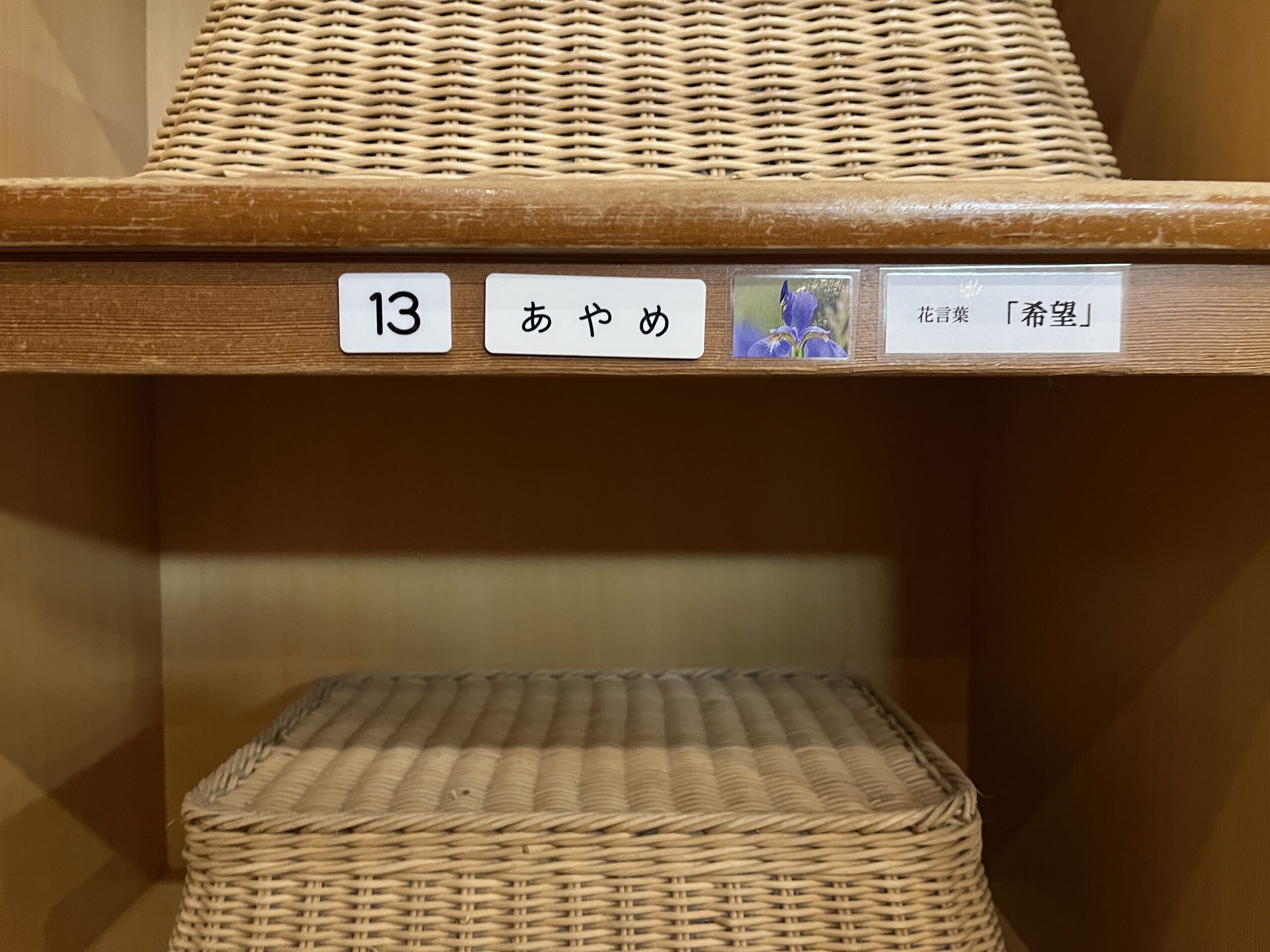
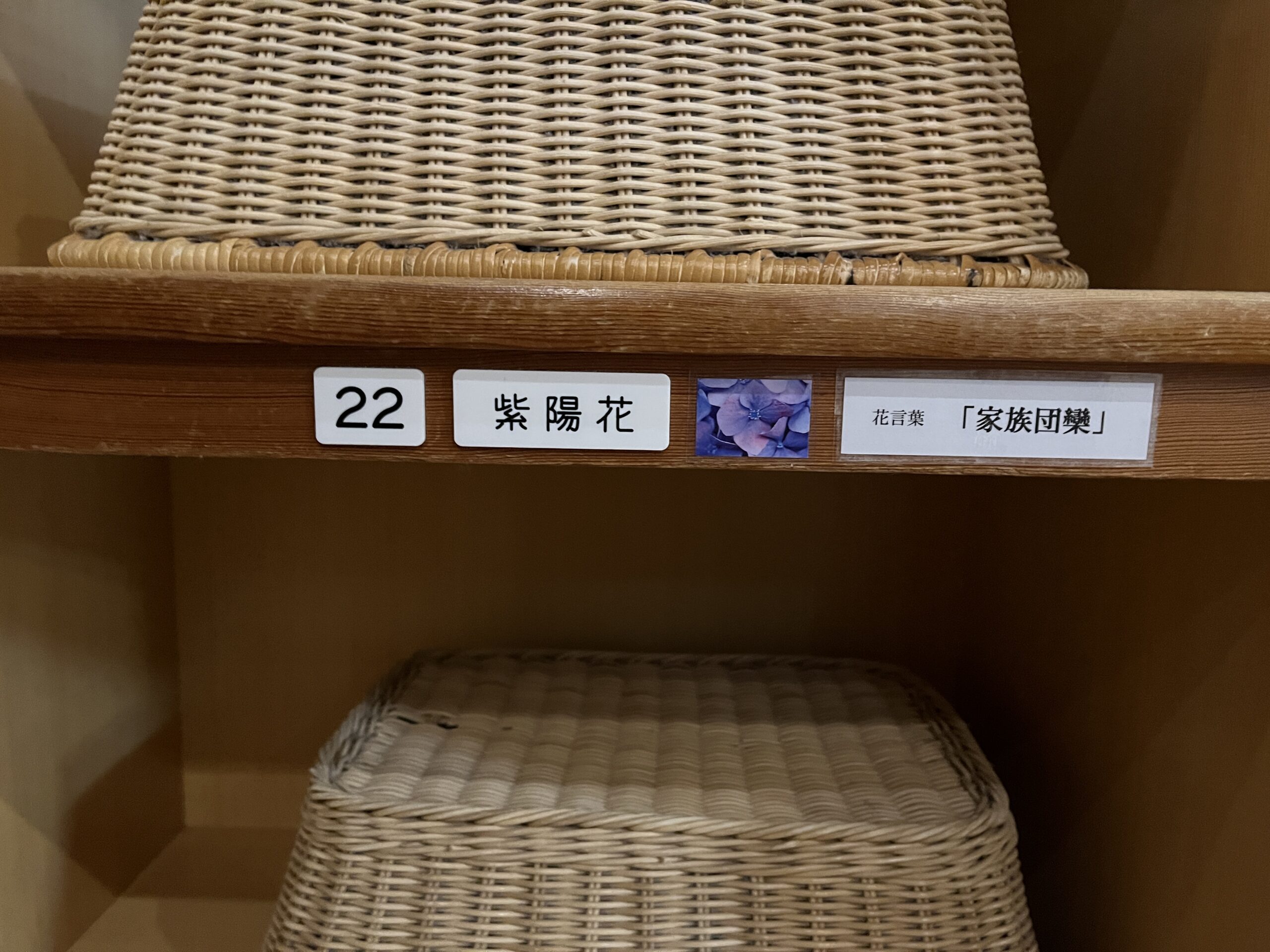
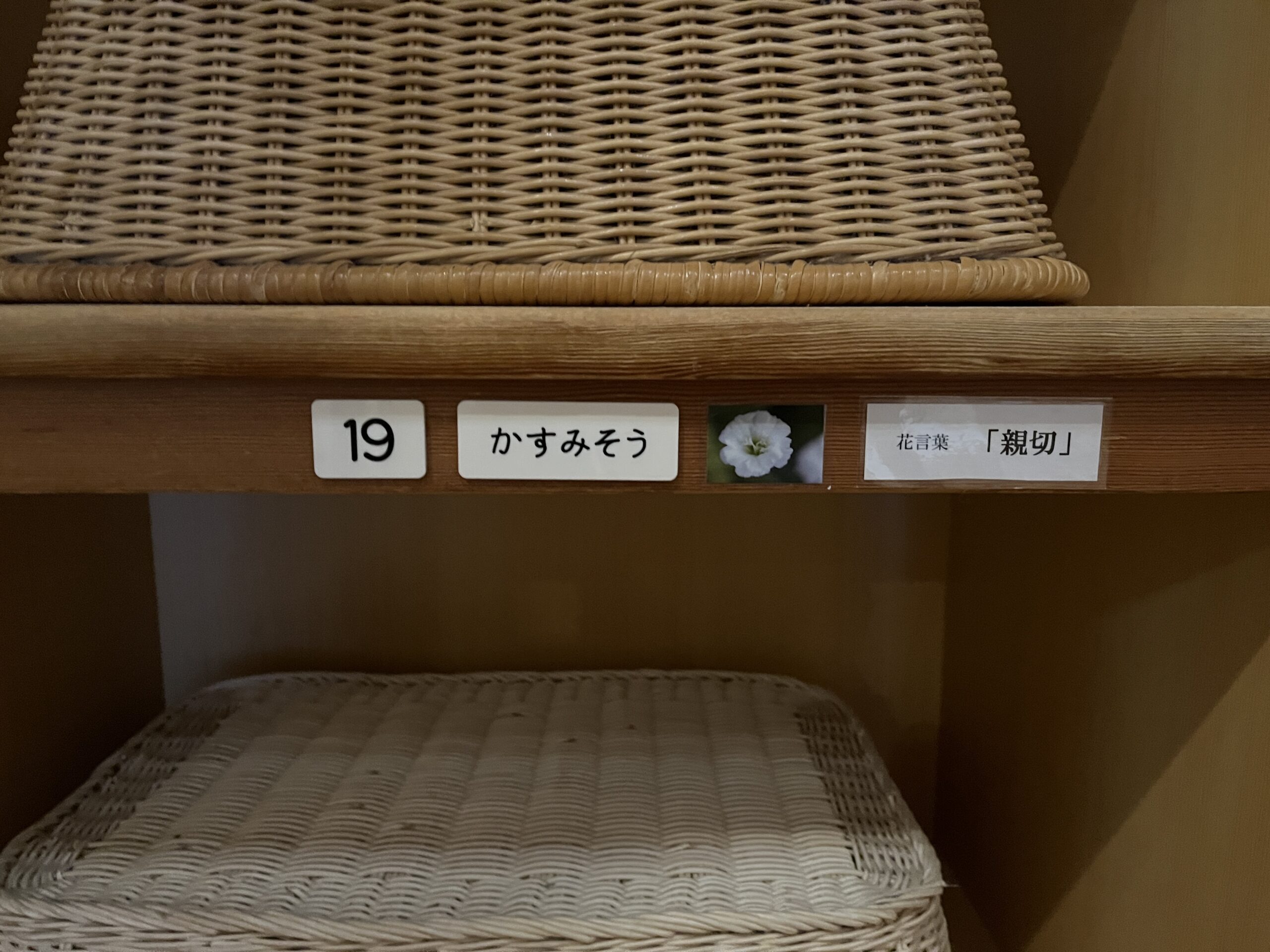
Even the shelves in the changing room had an elaborate naming system. Every compartment was labeled a different flower, with the picture and its meaning in floriography.
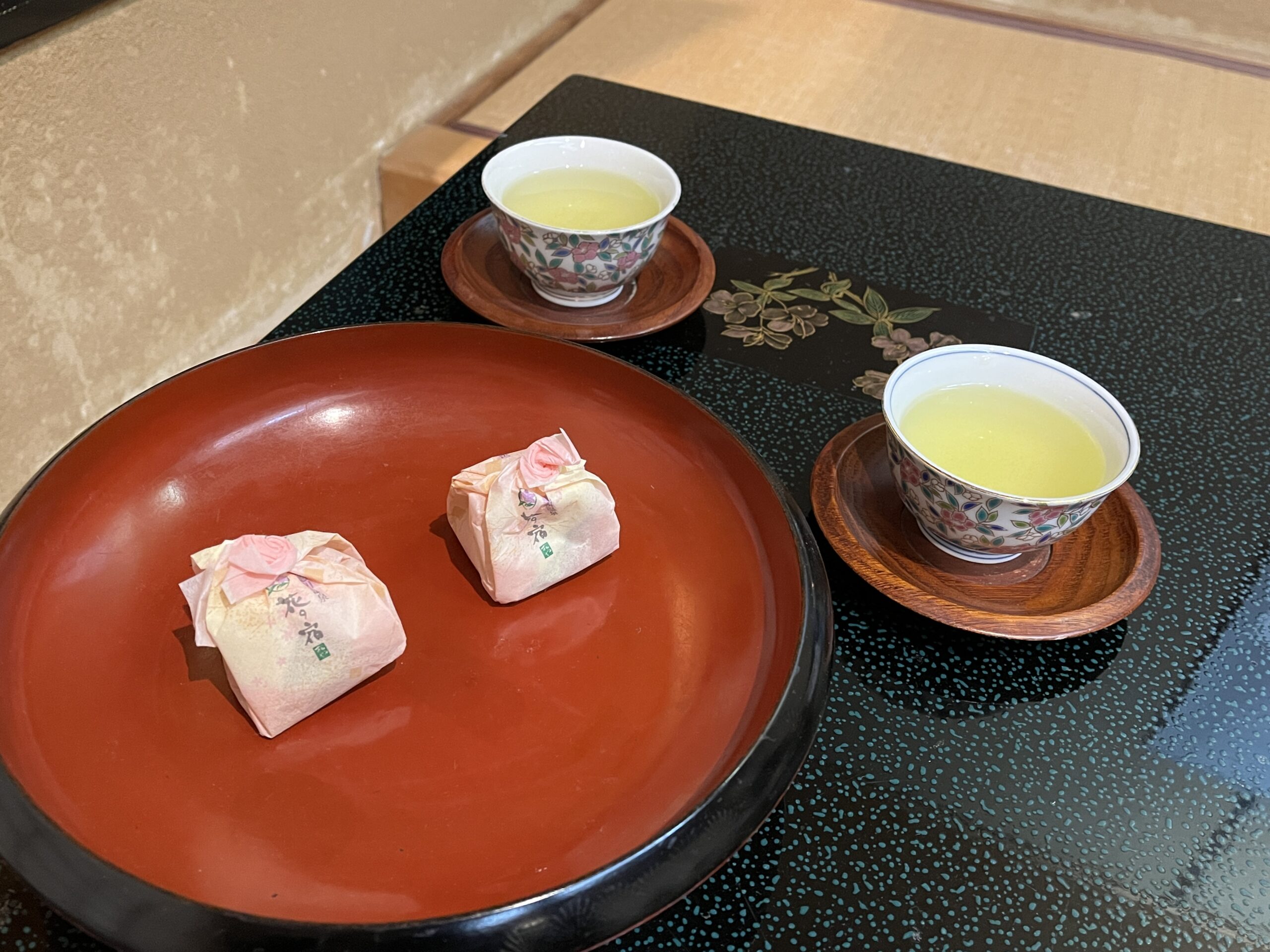
The wagashi in the room
The Japanese sweets that came with the room were in soft paper and the top was twisted into a pink rose which I thought was a beautifully feminine detail. The sweet itself was a mochi with black sesame paste filling and covered with kinako powder, and it went perfectly with green tea.
Even the socks were better than the usual ryokan socks. Thicker, and they had an extra ring of elastic band mid-foot for fit, and they didn’t start pilling and getting loose after one wear.
Sometimes you find quality in the littlest details.
The story behind it
At the gift shop, we found out from the staff that the ryokan was built by its owner for his wife, and decorated to the lady’s preferences.
Suddenly all the details and artworks clicked into an elaborate picture.
So essentially the owner built a canvas for his lady’s artistic touch, and it is now a living relic of her taste, her fancies, and all the things she loved.
My thoughts
I have a personal preference for places that tell a story, and this is very much up my alley. I love how the entire ryokan is a museum of a woman appreciating beauty in life, and I loved all the little details that gave it personality rather than standard hospitality.
That said, I don’t think this is for everyone.
The building is well cared for but it has seen better years.
Their staffing was also rather tight during my stay. They couldn’t open the bar due to not having the manpower and checking in took more than an hour with their limited staff and the number of guests.
My friend also found the dolls creepy, but to each their own.
I think this would be a lovely stay for artists and authors who are looking to immerse themselves in romanticism in a quiet ryokan and work on their projects.
Onsen Profile
Location: 19 Fujiwara, Nikko City, Tochigi Prefecture 321-2521
Day use availability: No
Type of onsen water: Alkali simple
Leave a Reply